
Senate-governor poll gaps of 4 points held in all 100 cases
Since 2002, every state whose final polls put its Senate and governor's races 4 points or more apart kept that order, and this year's gaps are wide.
 Polling Forecast
6 min read
Written in house from our poll data and our forecast.
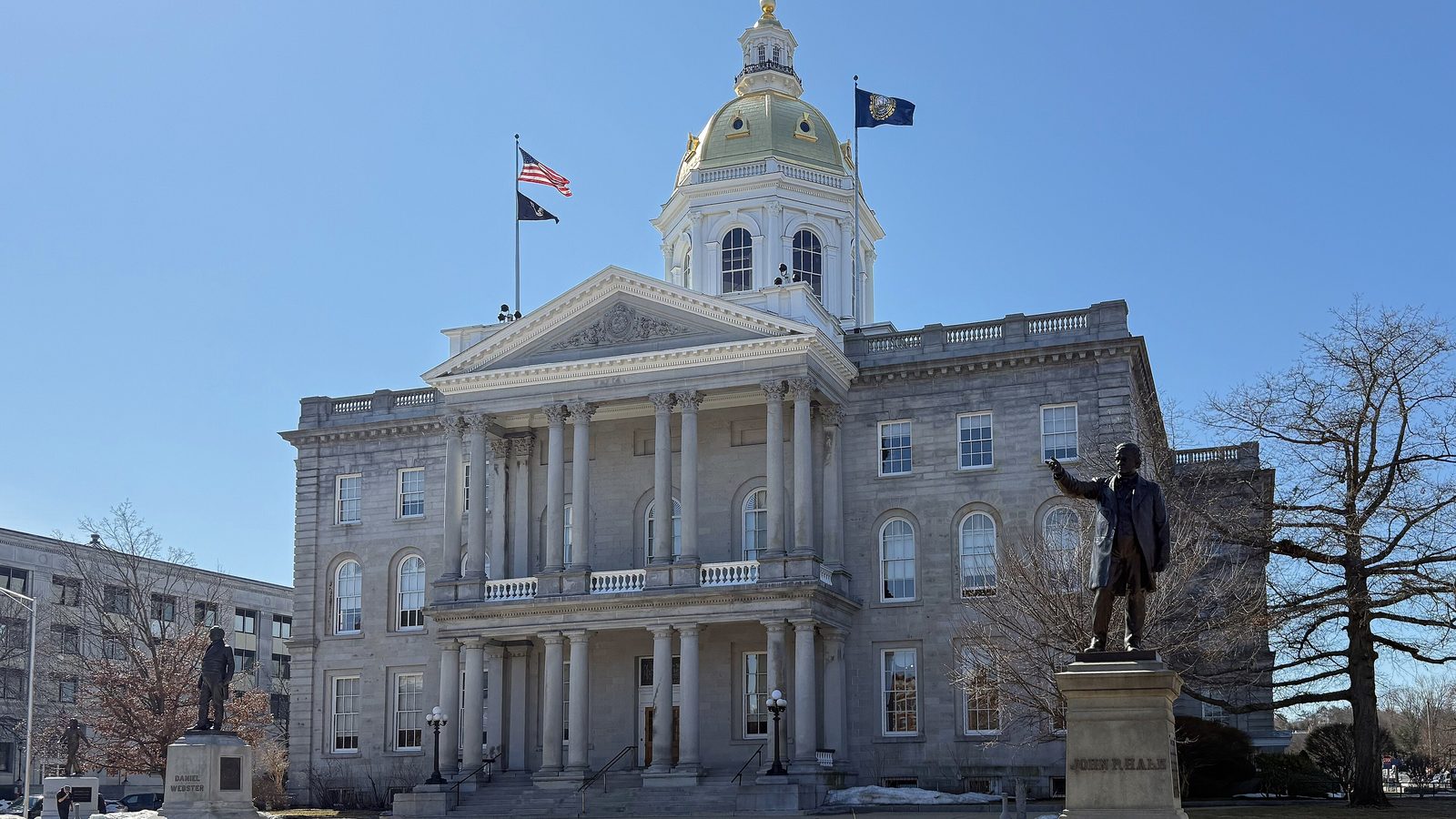

When the final polls in a state put the Senate race and the governor's race 4 points or more apart, the results have kept that order every time in our records: 100 times out of 100 since 2002.
That matters this year because the polls show unusually wide gaps between the two races in several states. In New Hampshire the Democrat leads for the Senate while the Republican governor leads for re-election, and the distance between the two races is 18 points. In Georgia it is 12. In Iowa and Maine the gap runs the other way, with the Democratic candidate for governor well ahead of the party's Senate candidate.
What we counted
We took every state and year from 2002 to 2024 in which both a Senate race and a governor's race were held as contests between a Democrat and a Republican, and in which nonpartisan pollsters published final polls in both. That gives 128 pairs of races in 123 state-years, the extra five coming from special Senate elections held alongside a regular one. For each race we averaged each pollster's last poll, measured on the decided vote. The poll gap is the Senate margin minus the governor margin; the result gap is the same sum on the actual votes.
The result gap tracked the poll gap closely. Fitted across all 128 pairs, each point of poll gap was worth 0.95 points of result gap, and the poll gap explained 94% of the variation in the result gap. Every one of the 100 pairs with a poll gap of 4 points or more kept its direction, and so did the 108 pairs with a gap of 3 or more. Small gaps carried no such promise. Of the 14 pairs separated by less than 2 points, 8 reversed.
The finding survives the obvious checks. Counting partisan polls as well, 103 of 103 gaps of 4 or more held. Dropping the special elections, 96 of 96 held. Keeping only pairs with at least three polls in each race, 45 of 45 held.
Wrong on the winner, right on the gap
The reason is that polls tend to miss both races in a state in the same direction. Across the 128 pairs the error in the Senate poll and the error in the governor poll had a correlation of 0.65, and since 2018 it has been 0.8. When the polls overstate one party in a state, they usually overstate it in both races, and the gap between the races comes through.
Since 2018, the final poll averages missed the Senate margin by 4.2 points on average and the governor margin by 4.8. They missed the gap between the two by 2.4 points, and in half of those 43 pairs by 1.4 points or less.
Ohio in 2018 shows the pattern. The final polls had Sherrod Brown winning the Senate race by 15 points and Richard Cordray, also a Democrat, winning the governorship by 3. Both numbers were well off: Brown won by 7 and Cordray lost by 4. The 12-point poll gap between the two races became 11 points in the result.
Georgia in 2022 is a closer guide to this year. The final polls put Raphael Warnock ahead in the Senate race by 1 point and Brian Kemp ahead for governor by 7, a gap of 7.5. On election night Warnock led by 1 and Kemp won by 7.5, a gap of 8.5. New Hampshire the same year had Maggie Hassan up by 4 and Chris Sununu up by 17 in the polls; Hassan won by 9 and Sununu by 16.
The narrowest escape among the 100 was South Carolina in 2014, where Lindsey Graham's Senate margin polled 4.5 points bigger than Nikki Haley's margin for governor and finished 1 point bigger. Iowa in 2002 came next: Tom Harkin's Senate lead ran 8 points ahead of Tom Vilsack's in the polls and only 2 points ahead in the votes. Both rest on a single Senate poll.
The reversals all came from small gaps. Michigan in 2018 had Debbie Stabenow polling 2.5 points ahead of Gretchen Whitmer; Whitmer finished 3 points ahead of her. New Hampshire in 2016 had the Democrat for governor polling 2 points better than Hassan in her Senate race. Hassan won by a tenth of a point and the Republican Chris Sununu took the governorship by 2.
Against the decline of ticket splitting
This sits against a long fall in split results. Sabato's Crystal Ball counted 165 cases in 19 postwar midterms of a state electing a senator and a governor from different parties, with ten or more states splitting in many cycles between 1962 and 2006. The Crystal Ball counted five splits in 2022, with Georgia a sixth once its runoff was settled, after six in each of 2014 and 2018. Pew Research Center found that in 2016 every Senate race went the same way as the state's presidential vote, while in 1986 the share of Senate races that went against the state's presidential vote peaked at 59%. Pew's Drew DeSilver noted that 2024 brought four mismatches, all Democratic Senate wins in states Donald Trump carried.
Our pairs fit that record. When the final polls showed the two races led by different parties, the results split 26 times out of 30. The gap has also been predicted more closely since 2018 than before it, when the average miss was 4.3 points.
We found no published work testing whether the poll gap between a state's Senate and governor's races holds up, though the split itself is widely reported. WRDW in Augusta, reporting a YouGov poll in September that put Jon Ossoff 10 points ahead and the governor's race within a point, called Georgia a premier split-ticket battleground.
The 2026 gaps
In our live averages, which adjust each poll for its pollster's usual house effect, 14 of the 19 states with polled Democratic-Republican pairs show gaps of 4 points or more.
New Hampshire has the widest. Chris Pappas leads the former senator John E. Sununu by 7.0 points for the open Senate seat; Governor Kelly Ayotte leads the Democrat Cinde Warmington by 11.1. In Georgia, Ossoff leads Mike Collins by 10.3 while the Republican Rick Jackson leads Keisha Lance Bottoms by 1.5 for governor, a gap of 11.8. New Mexico has Ben Ray Luján 17.7 points ahead for the Senate and Deb Haaland 6.0 ahead of Gregg Hull for governor. In South Carolina, Senator Darline Graham, appointed in July after the death of her brother Lindsey Graham, leads Annie Andrews by 0.7 points, against 13.0 for Alan Wilson over Jermaine Johnson in the governor's race.
The gap runs the other way in Iowa, where Rob Sand leads Zach Lahn by 7.5 for governor and Josh Turek leads Ashley Hinson by 0.6 for the Senate, and in Maine, where Hannah Pingree leads Robert Charles for governor by 10.8 while Troy Jackson, nominated in July after Graham Platner left the race, leads Senator Susan Collins by 1.6. Kansas and Texas also show leaders of different parties, with gaps of 7.1 and 5.8.
History does not say who wins any of these races. It says something narrower. If the record holds, Ayotte and Rick Jackson will run well ahead of their party's Senate candidates, Sununu and Mike Collins, whoever wins, and a Democratic Senate win in Iowa without Sand winning too would have no precedent in our records.
The limits
The record is small: 100 pairs, many of them lopsided, with a median gap of 15 points. Several 2026 averages rest on few polls: New Mexico's Senate race and South Carolina's governor's race have two each. Our historical gaps come from final polls; today's come from averages three weeks before election day, and the averages can still move. Idaho is left out, because Senator Jim Risch faces an independent, Todd Achilles, after the Democrat David Roth withdrew in July; Nebraska is left out for the same reason. And a rule that has held 100 times can still fail the next time.
Polling Forecast reads every poll in ten countries, corrects for how pollsters have missed before, and turns them into seats. Our forecasts, the polls and our methods are free to explore.
Elsewhere on Polling Forecast
 Rome prosecutors open a file on Vannacci's Futuro Nazionale
Futuro Nazionale is on 6.5% in our average and would win 23 seats outside both coalitions; the centre-left wins the Camera in 63% of our simulations.
 AfD's Siegmund will stand for premier in Saxony-Anhalt on 8 December
The AfD holds 39 of the 83 seats in Magdeburg; nationally it leads our average by 5.7 points and would win 193 Bundestag seats.
 Nawrocki promotes Domański reluctantly as the tribunal fight deepens
The government keeps a majority in only 10% of our simulations, while PiS, Konfederacja and KKP together would have 245 seats.