Governor and Senate polls point different ways in several states
Our forecast gives each party 25 governors, with Georgia and Alaska toss-ups and New Hampshire's governor and Senate races running 18 points apart.
 Polling Forecast
5 min read
Written in house from our poll data and our forecast.

Our forecast gives each party 25 governors after 3 November, a net gain of one for the Democrats, who hold 24 today. Thirty-six states elect a governor this year, and three seats change hands in our projection: Iowa and Ohio to the Democrats, Kansas to the Republicans. Two races are toss-ups, Alaska and Georgia, and the 80% range runs from 21 to 30 Democratic governors.
The averages behind that rest on 334 polls. In most states they track the Senate polls closely. In a handful they do not, and those are the most interesting races on the map.
The closest races
Georgia sits at R+1.1 in our projection and Alaska at R+1.4. In Georgia, Rick Jackson wins 59% of our simulations against Keisha Lance Bottoms, from a poll average of R+1.5 across 13 polls. WRDW reported on 4 October that an InsiderAdvantage poll had the two virtually tied, with about 7% of voters undecided.
Alaska has moved more than any race on the board. A month ago our forecast gave Jonathan Kreiss-Tomkins, the Democrat, a 74% chance. It now gives him 41%, after new polls from Siena College and Cygnal pulled our average from D+6.2 to D+1.3 on 7 October. Two of the latest polls in our average, from Alaska Survey Research and Siena, had Dave Bronson ahead. Alaska counts ranked choices, and Bronson shares the ballot with two other Republicans. Alaska Public Media reported on 6 October that Kreiss-Tomkins raised $2.1 million in eight weeks, more than twice the three Republicans combined.
Ohio is among the next closest. Amy Acton leads Vivek Ramaswamy by 2.8 points in our projection and wins 68% of simulations. The polls there disagree with one another more than usual. Newsweek listed six taken between mid-September and 6 October, ranging from a Ramaswamy lead of two points (co/efficient) to an Acton lead of nine (Suffolk). That spread is what a race within a few points looks like when pollsters model turnout differently.
Oregon (Tina Kotek, D+2.2), Wisconsin (David Crowley, D+2.7) and Nevada (Joe Lombardo, R+3.3) complete the races inside four points. Oregon is the odd one. Its six polls average R+2.1, against a fundamentals estimate of D+22.9 for a Democratic incumbent in a state that leans 14.7 points Democratic. Our projection blends the two and lands at D+2.2, with Kotek winning 65% of the time.
Where the governor and Senate polls part company
New Hampshire shows the widest gap. Chris Pappas leads the Senate race by 7.4 points in our projection. On the same ballot, Kelly Ayotte, the Republican governor, leads by 11.1. Taken at face value, the polls imply that close to one New Hampshire voter in ten will back the Democrat for Senate and the Republican for governor.
Georgia is next. Jon Ossoff leads his Senate race by 10.9 points, with a 97% chance, while the governor's race is a toss-up leaning Republican. That is a gap of about 12 points. In Texas, James Talarico leads the Senate race by 1.5 points while Greg Abbott leads for governor by 5.4, a gap of about seven. In Maine and Iowa the gap runs the other way: Democrats for governor lead by more than their party's Senate candidates.
Gaps like these are not new, and our results table shows how large they can get. In New Hampshire in 2022, Chris Sununu won the governorship by 15.6 points while Maggie Hassan held her Senate seat by 9.2, a difference of almost 25 points. In Ohio the same year Mike DeWine won by 25 and JD Vance by six. In Georgia Brian Kemp won by 7.5 points while Raphael Warnock led the first round of the Senate race by one.
Our model is built to allow for it. Governors win by more than their state's presidential lean would suggest more often than senators do, so our governor fundamentals give the lean less weight and an incumbent more: about 15 points of margin, fitted on 322 governor races since 2000. Vermont's Phil Scott, a Republican leading by 5.3 points in a state that leans 32.5 points Democratic, is the extreme case.
How governor polls have missed
To see how far to trust the averages, we matched every final governor poll in our database against the result, for the six midterms from 2002 to 2022. Across 173 races, the average of the final polls missed the winning margin by 4.3 points. In races decided by less than 10 points, 76 of them, the miss was 3.2 points, about the same as for Senate races of the same closeness (3.2 points on 45 races).
The polls put the wrong candidate ahead in 14 of the 173 races, all of them decided by less than 10 points. That is about one close race in five. Recent examples include Florida and Ohio in 2018, where the final polls had the Democrats ahead and the Republicans won, and Arizona and Wisconsin in 2022, where they had the Republicans ahead and the Democrats won.
There is no fixed direction. In races of every margin, the final polls overstated the Democrats by 4.6 points on average in 2002 and 4.2 in 2014, and came within about a point in 2006, 2010, 2018 and 2022. In the close races of 2022 they understated the Democrats by 1.2 points. A miss of 3 to 4 points would be ordinary, and it would be enough to settle Georgia, Alaska and Ohio either way.
What to watch
Our Alaska page applies each past year's average Senate and governor miss to that race: two of 12 would hand it to the Democrat. The same test runs on every race in our forecast. For the governors as a whole, the projection of 25 each is less a prediction than a balance point. If the polls miss toward the Democrats as they did in 2022's close races, they pick up Georgia and Alaska. If they miss the other way, as in 2014, Ohio, Wisconsin and Oregon come into play for the Republicans.
Polling Forecast reads every poll in ten countries, corrects for how pollsters have missed before, and turns them into seats. Our forecasts, the polls and our methods are free to explore.
Elsewhere on Polling Forecast
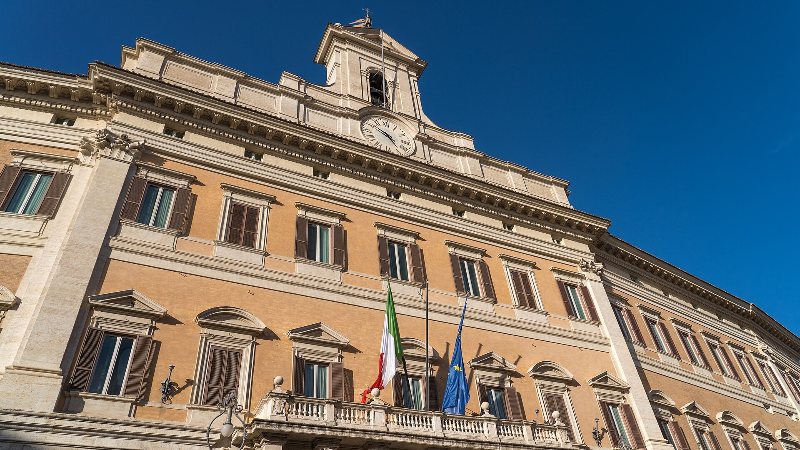 Rome prosecutors open a file on Vannacci's Futuro Nazionale
Futuro Nazionale is on 6.5% in our average and would win 23 seats outside both coalitions; the centre-left wins the Camera in 63% of our simulations.
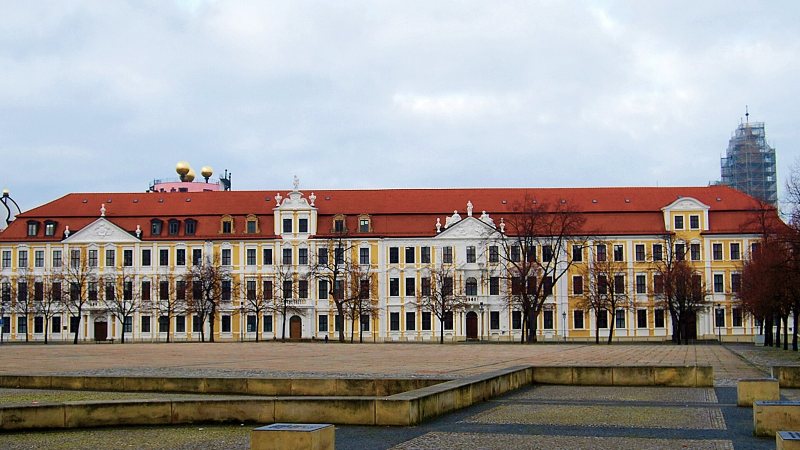 AfD's Siegmund will stand for premier in Saxony-Anhalt on 8 December
The AfD holds 39 of the 83 seats in Magdeburg; nationally it leads our average by 5.7 points and would win 193 Bundestag seats.
 Nawrocki promotes Domański reluctantly as the tribunal fight deepens
The government keeps a majority in only 10% of our simulations, while PiS, Konfederacja and KKP together would have 245 seats.