
One point of swing would cost House Democrats ten seats
Our projection gives the Democrats 231 seats and a 78% chance of a majority, but one point of national swing costs them ten seats.
 Polling Forecast
5 min read
Written in house from our poll data and our forecast.
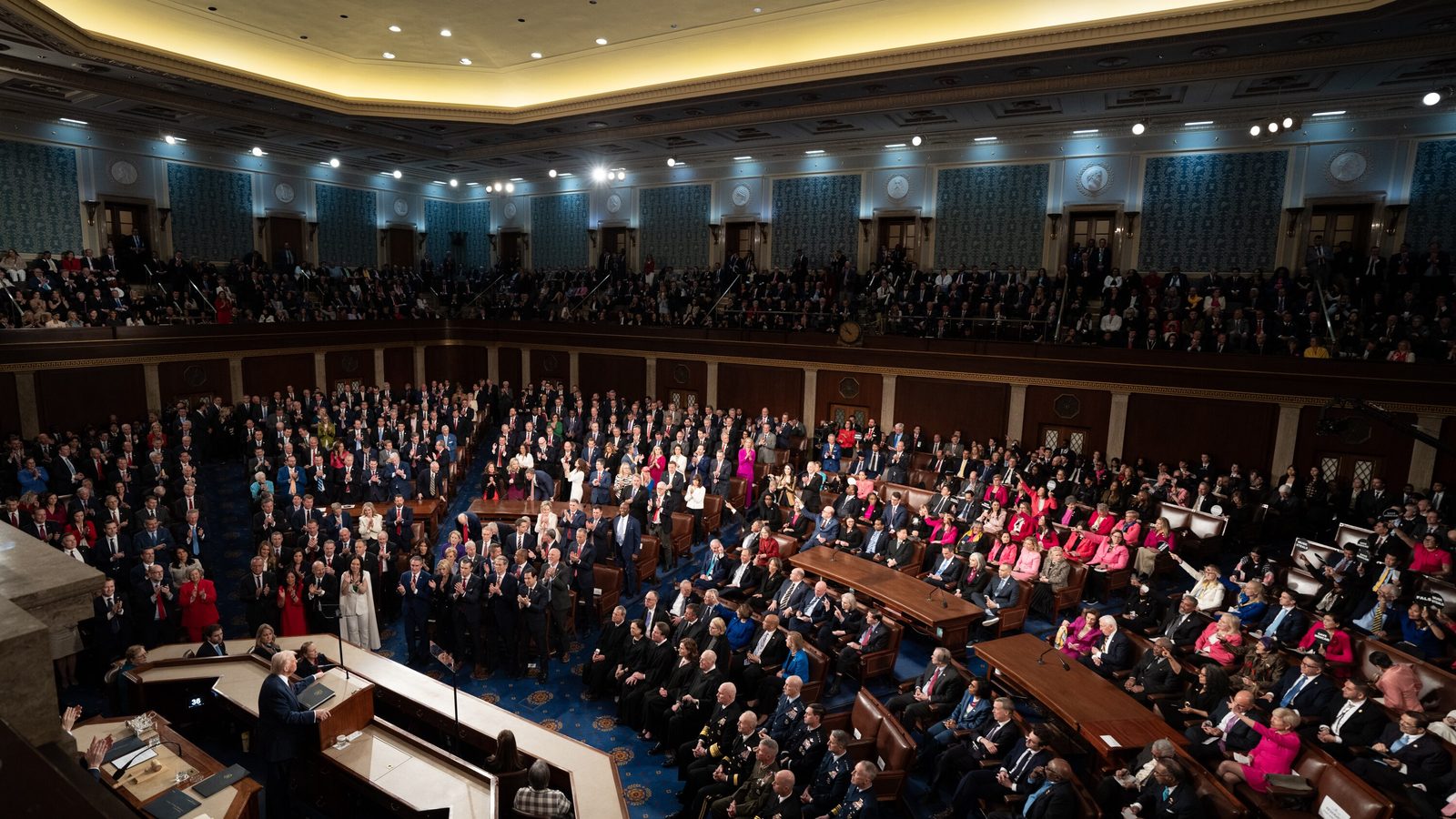

The Democrats win 231 House seats to the Republicans' 204 in our projection, and a majority in 78% of our 5,000 simulations. That is a comfortable central figure resting on an uncomfortable shape: ten Democratic leads sit within a point of the line, so the first point of polling error costs the Democrats far more than the next three.
Where the majority is decided
A party needs 218 seats. Our 80% range for the Democrats runs from 210 to 270, and the median is 233. On our ratings, 192 seats are safe Democratic, 16 likely and 13 leaning, against 112 safe Republican, 62 likely and 20 leaning. Twenty are toss-ups, and in 78 districts neither party wins more than 90% of simulations.
The deciding seat in our projection, the 218th when the districts are lined up by projected margin, is Pennsylvania's 7th district, where Bob Brooks leads the Republican incumbent Ryan Mackenzie by 2.8 points and wins 69% of simulations. The seats around it are of the same kind: Michigan's 7th, where William Lawrence leads the Republican Tom Barrett, also at D+2.8; Washington's 3rd at D+2.7; North Carolina's 1st, held by the Democrat Don Davis on redrawn lines, at D+2.3; Iowa's 3rd at D+2.1.
As with the Senate, the simulation also records which district is the 218th in each run. No district does it more than 3% of the time. Pennsylvania's 7th, Virginia's 2nd, Michigan's 7th, Colorado's 8th, North Carolina's 1st, New Jersey's 7th and Ohio's 7th each reach 3%. Six of those seven are held by Republicans, and our projection has the Democrat ahead in all of them, by between 0.9 and 5.5 points, and in all but Ohio's 7th by more than two. The majority is being decided mostly in suburban and exurban seats the Democrats lead narrowly, not in the coin-flip districts.
The coin flips
The closest races sit further out, in seats the Democrats do not need for a majority but would add to one. Ohio's 9th, where Marcy Kaptur defends her seat against Derek Merrin, is D+0.1. So are Pennsylvania's 10th, Scott Perry against Janelle Stelson, Florida's 22nd and Virginia's 1st. Wisconsin's 3rd, Derrick Van Orden against Rebecca Cooke, is even. Wisconsin's 1st, Maine's 2nd, Pennsylvania's 1st, Iowa's 1st, Michigan's 10th and Ohio's 7th all have the Democrat ahead by less than a point, and five more, Michigan's 4th, Pennsylvania's 8th, Texas's 15th, Iowa's 2nd and Missouri's 2nd, have the Republican ahead by less than a point.
Most of these seats have few polls of their own. Of the 65 districts our battleground page counts as in doubt, 53 have been polled, and where they have, the polls carry on average 37% of the forecast. The rest comes from each district's presidential lean and our reading of the national House vote, D+6.7. A single district poll can therefore move a seat a long way: a Public Policy Polling survey in Florida's 16th moved Sydney Gruters's chance by 12.6 points this fortnight.
Redistricting
Nine states vote on new congressional lines this year, covering 173 districts. Donald Trump carried 102 of those districts in 2024 on the old lines and 105 on the new ones. Holding today's national environment fixed, with no incumbents and no district polls, our model puts the net effect at 5.2 seats away from the Democrats.
Texas's mid-decade map is worth 2.7 seats to the Republicans on that measure, Florida's 1.8, and Louisiana's and Tennessee's about one each. Alabama's reinstated 2023 plan costs the Democrats 0.8, Ohio's commission plan 0.5 and North Carolina's redraw of its 1st and 3rd districts 0.3. Against that, California's voter-approved Proposition 50 map is worth 1.9 seats to the Democrats and Utah's court-ordered map 0.9.
Two attempted redraws did not take effect. In Missouri, a referendum petition suspended the legislature's new map, the state Supreme Court ruled on 3 September that it is not law unless voters approve it, and the 2022 map stands for 2026; voters decide Proposition A on 3 November. In Virginia, the state Supreme Court voided an April referendum that would have let the General Assembly redraw, so the existing districts stay.
The redraw is worth about five seats. As the next section shows, a one-point national swing is worth about twice that.
What a polling miss does
Our what-if page moves every contested district by the same national swing. At our central reading, D+6.7, the Democrats win 231. Move the national vote one point toward the Republicans, to D+5.7, and they fall to 221: ten seats gone, because Ohio's 7th, Iowa's 1st, Michigan's 10th, Pennsylvania's 1st, Maine's 2nd, Wisconsin's 1st and the four Democratic-leaning coin flips above all sit inside that point. Then the curve flattens. At D+4.2 the Democrats still have 219, and at D+4.0 they hold the House 218-217. At D+3.9 the Republicans win it by the same margin.
Our forecast already takes 2.1 points off the Democratic lead in the generic-ballot polls, which stand at D+8.8 on our average. If those polls are exactly right, the Democrats win 242 seats. Replaying each past cycle's average error in the final statewide polls, the Democrats keep the House in eight of the 12 cycles since 2002. The four that give the Republicans the majority are 2002, 2014, 2016 and 2020, the last of them 229-206. A repeat of 2024 leaves the Democrats on 220; a repeat of 2022, on 221.
The special elections held since January 2025 have run well ahead of both readings, with an average swing to the Democrats of 17.8 points across 11 races against the 2024 presidential margin. We show that figure but do not feed it into the forecast, because we hold no specials from earlier cycles to test it on.
The latest
The parties' spending matches this map. NPR's analysis on 8 October counted more than 90 districts where money is committed in the closing weeks and close to half a billion dollars in ad reservations still to run. It reported more than $20 million booked in North Carolina's 1st, made more Republican by the redraw, and millions spent by both parties in Kentucky's 6th, a seat Trump won by 15 points that our forecast rates a toss-up. Two October polls had Zach Dembo ahead by seven and nine points, but both were paid for by Democrats, and our forecast counts such polls at half weight and takes 2.5 points off each. With the district's lean added, Ralph Alvarado wins 58% of our simulations. NPR also reported that both parties had cancelled some reservations, including Republican money in Nebraska's 2nd district.
Cook Political Report now lists 22 toss-ups, NPR reported, against 20 in our ratings. The two counts arrive at a similar picture by different routes: a Democratic majority that is likely, and a margin that depends on a dozen or more seats where the polls are thin and the leads are under a point.
Polling Forecast reads every poll in ten countries, corrects for how pollsters have missed before, and turns them into seats. Our forecasts, the polls and our methods are free to explore.
Elsewhere on Polling Forecast
 Rome prosecutors open a file on Vannacci's Futuro Nazionale
Futuro Nazionale is on 6.5% in our average and would win 23 seats outside both coalitions; the centre-left wins the Camera in 63% of our simulations.
 AfD's Siegmund will stand for premier in Saxony-Anhalt on 8 December
The AfD holds 39 of the 83 seats in Magdeburg; nationally it leads our average by 5.7 points and would win 193 Bundestag seats.
 Nawrocki promotes Domański reluctantly as the tribunal fight deepens
The government keeps a majority in only 10% of our simulations, while PiS, Konfederacja and KKP together would have 245 seats.