
Labour's projected majority grows to 10 in the week of Healey's first Budget
Four new polls all have Labour ahead, by 4 to 7 points. Our projection gives Labour 330 seats and a 46 per cent chance of a majority, and the one poll taken partly after the Budget has Labour up 2.
 Polling Forecast
3 min read
data as of 30 October
Written in house from our poll data and our forecast.
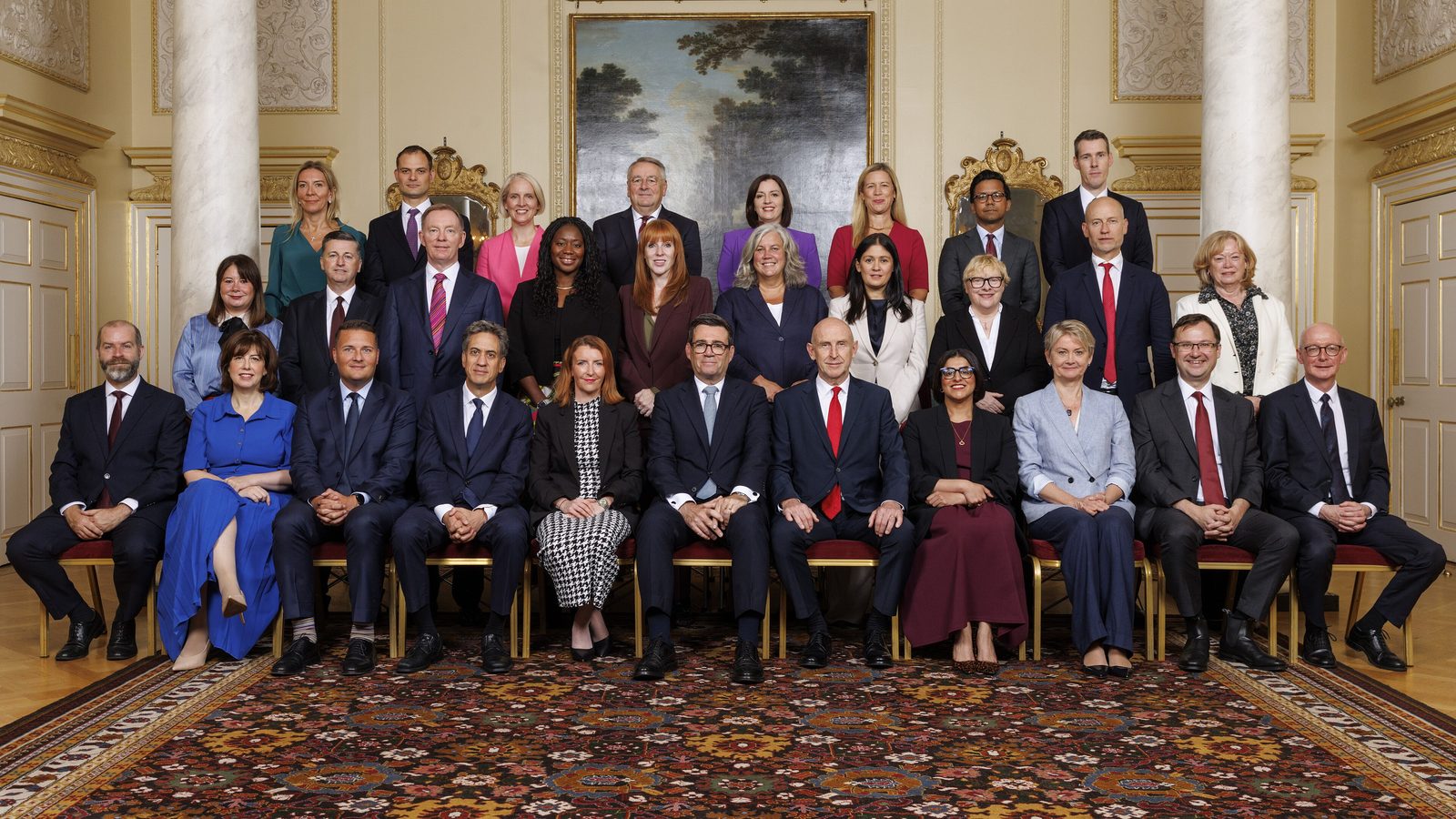

Four voting-intention polls have been published since our round-up on Monday, and all four put Labour first. Deltapoll (26 October) had Labour on 32, Reform UK 25 and the Conservatives 21. More in Common (26 October) had Labour 28, the Conservatives 24 and Reform 23. YouGov for The Times and Sky News (26 October) had Labour 27, the Conservatives 22, Reform 20, the Liberal Democrats 11 and the Greens 10. Find Out Now (29 October) had Labour 28, the Conservatives 21, Reform 20 and the Greens 11.
Find Out Now was in the field on 28 and 29 October, so it is the only poll so far taken partly after the Budget. It has Labour up 2 on its poll of a week earlier, the Conservatives and Reform unchanged and the Greens down 2.
The race for second is still open. Reform is second in Deltapoll and third in the other three. Our poll average has Labour on 28.4, Reform 22.4, the Conservatives 21.4, the Liberal Democrats 10.2 and the Greens 9.2: a Labour lead of 6.0 points.
Our projection
On these polls Labour wins 330 seats, four more than the 326 needed: a majority of 10. The Conservatives win 151, the Liberal Democrats 72, Reform UK 34 and the SNP 23. Labour wins a majority in 46 per cent of our 5,000 simulated elections and is the largest party in 95 per cent. On Monday we had Labour on 327 seats, a majority of 4, with a majority for any party in 41 per cent.
Our vote shares differ from the polls. We allow for how British polls have missed before, and that gives Labour 28.0 per cent, the Conservatives 22.4, Reform 21.2, the Liberal Democrats 9.8 and the Greens 9.5. The biggest effect is on the Conservatives: 151 seats rather than the 137 the polls would give them at face value. Reform had the week's biggest move in our forecast, down 0.6 points.
The poll check
Pollsters differ in how high they put each party, so we measure each one against the others polling the same weeks. Find Out Now usually has Labour about 3 points lower and the Greens about 3 points higher than other pollsters; allowing for that, its 7-point Labour lead over the Conservatives is closer to 9. More in Common usually has the Conservatives higher; its lead of just over 3 points becomes 5. YouGov's 5-point lead becomes about 6. Deltapoll runs close to the other pollsters, so its 7-point lead over Reform stands. Read every way, Labour leads by 5 to 9 points. Every poll is checked on our poll check page.
The Budget and what comes next
John Healey presented his first Budget, and the first of Andy Burnham's government, on Wednesday 28 October. Its centrepiece was help with energy bills: a £100 payment this winter to 20 million households in council tax bands A to D, costing £2.6 billion, paid for by doubling the bank surcharge to 6 per cent for 15 months from January. The fuel duty cut runs to July 2027, and gas standing charges go from next year for around 23 million homes. Kemi Badenoch called it more borrowing and more tax, and said "instead, we got 4p off gherkins". Ed Davey said the economy had to grow first.
Find Out Now caught only the first day after it. Next week's polls will be the first taken wholly after the Budget, and they will show whether it has moved anyone.
The next general election is due by 15 August 2029. Our forecast shows what today's polls would mean at an election, corrected for how British polls have missed before; at elections since 2000 the final polls were out by 1.7 points per party on average. A miss as large as 2017's would give Labour 400 seats; one like 2024's would leave it on 275.
Polling Forecast reads every poll in ten countries, corrects for how pollsters have missed before, and turns them into seats. Our forecasts, the polls and our methods are free to explore.
Elsewhere on Polling Forecast
 When the polls agree too much: herding, and how our forecast guards against it
Polls of a close race should scatter by chance. In 2024 they barely did. Here is why that matters, and the four things our model does so a pack of look-alike polls cannot make it overconfident.
 Polls understated PiS in 31 of 32 final surveys since 2024
At four national votes since Tusk took office, final polls put PiS or its candidate too low. Our forecast makes no allowance for it.
 Private polls understated Spain's PSOE at six of eight elections
104 of 142 private final polls since 2004 had the PSOE too low, but even a repeat of 2023 would probably leave the PP and Vox a majority.