
YouGov puts Labour four points ahead in a quiet polling week
One poll was published in the week to 21 October, and our average barely moved: Labour 27.8, Reform UK 22.5, the Conservatives 21.5.
 Polling Forecast
2 min read
data as of 19 October
Written in house from our poll data and our forecast.
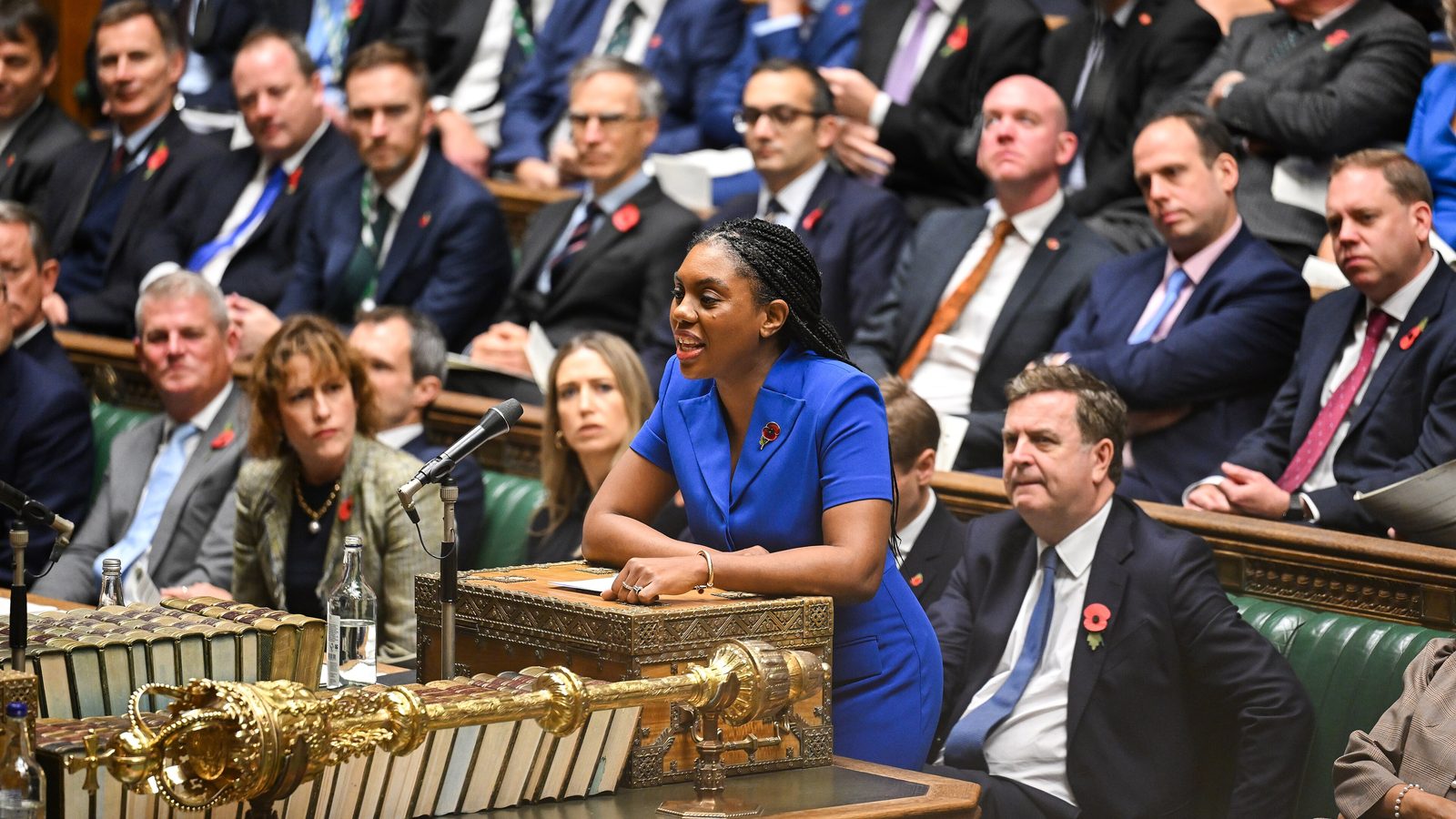

Only one voting-intention poll was published in the week to 21 October, from YouGov, and our average hardly moved. Labour is on 27.8 per cent, up 0.5 points over the last week of polling. Reform UK is on 22.5, down 0.2, and the Conservatives are on 21.5, up 0.3. The Lib Dems are on 10.2 and the Greens on 9.1.
It has been a thin month as well as a thin week: our average draws on 18 polls published in the last 30 days.
YouGov has the Conservatives second
YouGov finished its fieldwork on 19 October. It had Labour on 27, the Conservatives on 23 and Reform UK on 22, which puts Labour four points ahead of the Conservatives rather than Reform UK. The Lib Dems were on 11, the Greens on 10 and Restore Britain on 3.
Against our average, the poll had the Conservatives 1.5 points higher and Labour 0.8 points lower. Reform UK was 0.5 points lower, the Greens 0.9 higher and the Lib Dems 0.8 higher. Each of those differences is within the normal scatter of a single poll, which is expected to land within about 3 points of the truth on a party's share 19 times in 20.
Part of the gap is YouGov's usual pattern. Across 96 polls it has tended to show the Lib Dems 2 points higher than other pollsters and the Greens 1.7 points higher, and Reform UK 1.9 points lower and Labour 1.5 points lower. All four are clear differences, more than twice their standard error. The Conservatives usually come out 0.8 points lower in its polls.
With those usual differences taken off, the poll reads Labour 28.5, Reform UK 23.9 and the Conservatives 23.8. On that like-for-like basis Labour leads Reform UK by 4.6 points, the Lib Dems are on 9 and the Greens on 8.3. That is close to the order in our average: Labour first, with Reform UK and the Conservatives close together behind.
Our forecast
Our projection still points to a hung parliament. Labour would be the largest party on 319 seats, short of the 326 needed for a majority and 92 fewer than the 411 it won in 2024. The Conservatives would have 151 seats, up from 121, and the Lib Dems 71. Reform UK would win 39 seats, up from 5, and the SNP 29.
We give Labour a 94 per cent chance of being the largest party. The chance that any party wins a majority is 38 per cent.
The next general election is due by 15 August 2029 at the latest, 1,029 days away, and has not been called. Our forecast describes what today's polls would mean at an election, not what will happen then.
Polling Forecast reads every poll in ten countries, corrects for how pollsters have missed before, and turns them into seats. Our forecasts, the polls and our methods are free to explore.
Elsewhere on Polling Forecast
 When the polls agree too much: herding, and how our forecast guards against it
Polls of a close race should scatter by chance. In 2024 they barely did. Here is why that matters, and the four things our model does so a pack of look-alike polls cannot make it overconfident.
 Polls understated PiS in 31 of 32 final surveys since 2024
At four national votes since Tusk took office, final polls put PiS or its candidate too low. Our forecast makes no allowance for it.
 Private polls understated Spain's PSOE at six of eight elections
104 of 142 private final polls since 2004 had the PSOE too low, but even a repeat of 2023 would probably leave the PP and Vox a majority.