
Private polls understated Spain's PSOE at six of eight elections
104 of 142 private final polls since 2004 had the PSOE too low, but even a repeat of 2023 would probably leave the PP and Vox a majority.
 Polling Forecast
6 min read
Polling Forecast
6 min read
Written in house from our poll data and our forecast.
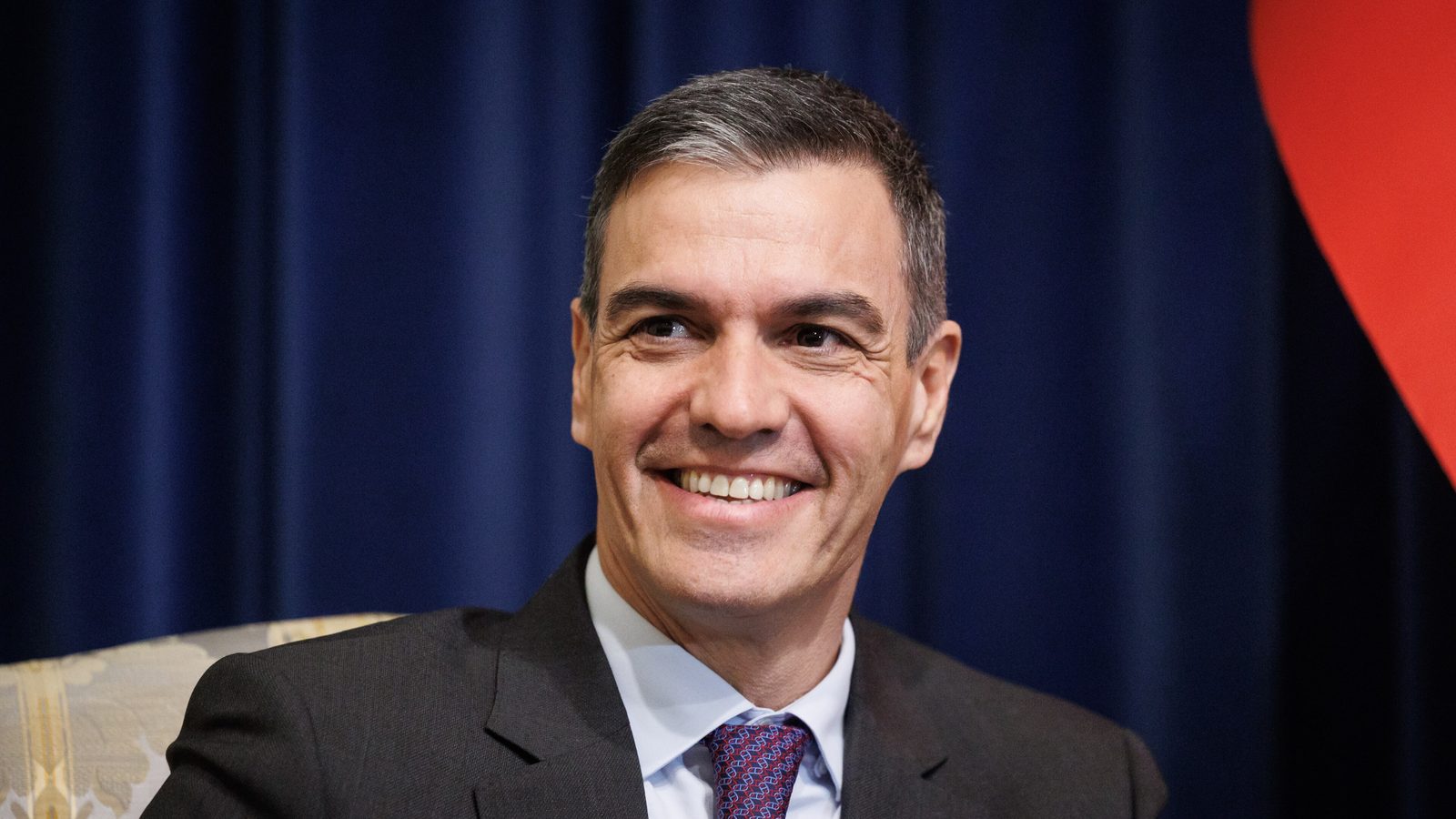
.jpg)
Spain's private pollsters have put the PSOE too low at six of the last eight general elections. Of the 142 final polls they published before the votes of 2004 to 2023, 104 had Pedro Sánchez's party, or his predecessors', below the share it went on to win. Taken election by election, they overstated the PP's lead over the PSOE by 2.2 points on average.
The pattern matters now because Spain votes again on 29 November. Sánchez called the election on 5 October, three days after Congress rejected his housing decrees. The PP, Vox and Junts voted against them, according to Wikipedia's article on the election. Our average of 16 pollsters puts the PP on 32.3% and the PSOE on 26.4%, a lead of 6.0 points. El Plural reported on 13 October that the PSOE had accused polls in right-leaning media of repeating 2023, when they gave the PP a wider lead than it won. On the general-election record, our data shows the pattern the party describes, though it says nothing about motive. It also shows why that record is weaker than it looks, and why it would probably not change who governs.
What we counted
We took each pollster's last poll before the five-day publication ban, at each of the eight general elections since 2004, and compared its PSOE figure with the official result. We left out the Centro de Investigaciones Sociológicas, the state pollster, because its record runs the other way and it is not in our current average. That leaves 142 polls from private firms, between 10 in 2004 and 21 in 2016 and 2023.
The PSOE was too low in 2004 (all 10 polls, by 5.1 points on average), 2008 (15 of 17, by 1.5), 2015 (16 of 20, by 1.5), 2016 (20 of 21, by 1.4), November 2019 (15 of 19, by 0.7) and 2023 (all 21, by 3.5). It was too high in 2011, when only one of 17 polls had it too low and the average was 2.8 points over, and in April 2019, by 0.5.
The 2023 miss is the one Spaniards remember. Private final polls had the PP about six points ahead. It won by 1.4, with 33.1% to the PSOE's 31.7%. Every one of the 21 had the PSOE too low, from 2.3 points (AtlasIntel) to 5.4 (Invymark). The PP and Vox, which looked close to a majority, won 170 seats, six short. Sánchez stayed in office.
Where the pattern is weaker
Two things cut the headline down. The first is 2004. The election came three days after the Madrid train bombings of 11 March, and every published poll had finished fieldwork before them. That one election accounts for much of the average: without it, the PP's lead was overstated by 1.1 points, not 2.2. The 2004 figure measures late events as much as the polls.
The second is size. Four of the six misses were under two points, inside the scatter we would expect from one set of polls. Only 2004 and 2023 were large. The lead error also does not line up with the PSOE's: in 2016 the polls had the PSOE too low but the PP lower still, so they understated the PP's lead.
Our methodology paper on Spain reaches a cautious conclusion for these reasons. Our rule takes off half of a party's average past miss only if doing so would have improved past forecasts, each tested without knowing its own result. For Spain it would not have, so our forecast takes the polls as published.
The state pollster runs the other way
The CIS has its own record, and it splits in two. Up to 2016 it also had the PSOE too low at four of five elections, by 7.1 points in 2004. At the three general elections since 2018, when José Félix Tezanos took over, it had the PSOE too high: by 1.5 points in April 2019, 4.2 in November 2019 and 0.5 in 2023, when it was the closest poll. At regional elections the gap is wider. The CIS had the PSOE too high at all 10 regional votes it polled since 2020, by 2.6 points on average. Kiko Llaneras of El País wrote in October 2025 that the CIS had overstated the left at 41 of 42 elections since 2018.
That makes the CIS's September barometer, with the PSOE on 31.0% and the PP on 25.5%, a poor guide to the private firms' errors. Fieldwork ended on 4 September, before the election was called, and it falls outside our 30-day window.
Regional elections tell a different story
If private polls had a fixed problem finding PSOE voters, it should show at regional elections, where the same firms poll the same party. It does not. At 25 regional elections since 2020, 231 private final polls put the PSOE 0.4 points too high on average. They had it too low at 11 of the 25, and they understated the PP's lead over the PSOE by 1.4 points on average. The three most recent votes split: the PSOE was 3.9 points too high in Extremadura last December, 2.2 too low in Castilla y León in March and almost exact in Andalusia in May.
Colmena de Datos, which corrects each pollster for its past errors, said on 13 October that the PSOE had been understated at three of the four general elections since 2016, and put part of it down to online methods that exaggerate trends. On its corrected average the PP and PSOE are practically tied. We do not go that far: the regional record and the 2011 and April 2019 misses show the direction can change.
What it would mean on 29 November
The firms in today's average are mostly the ones that missed in 2023. Of our 16 pollsters, 13 published a final poll that year, and all 13 had the PSOE too low. Their current leads range from 2.6 points (GESOP) to 9.1 (NC Report). 40dB, the closest pollster in 2023 on our track-record page, has the PSOE on 28.1% and the PP on 31.9% in its poll for El País and Cadena SER, with fieldwork on 7 and 8 October. Sigma Dos, for El Mundo on 12 October, has the PSOE on 25.3%.
On the average as it stands, our projection gives the PP 137 seats, the PSOE 108 and Vox 64. The PP and Vox together have 201, and reach 176 in over 99% of our simulations.
We ran the past error through our seat model. Cutting the PP's lead by 2.2 points, half from the PP and half to the PSOE, gives the PP 132 seats, the PSOE 113 and Vox 65. The PP and Vox still have 197 and a majority in 98% of 500 simulations. Applying the full 2023 miss to the four largest parties, the PSOE up 3.5 points, the PP down 1.2, Vox down 0.7 and Sumar down 1.0, the PSOE closes to 120 seats against the PP's 130. The right still has 193, and a majority in 95% of runs.
The cushion is the difference from 2023. To pull the PP and Vox below 176 in our model, about six points of their combined vote would have to move to the PSOE: at 5.5 points they keep 177 seats, at 6.0 they fall to 174. Since Vox entered Congress in 2019, the largest overstatement of the two parties together by private final polls was 4.4 points, in April 2019.
So the record points one way for the PSOE and the PP's lead, and the most recent election points that way hardest. But on today's numbers, even a repeat of 2023 would leave the PSOE 10 seats behind the PP and a right-wing majority in place. What it would change is the balance on the right. In both corrected runs the PP's own seats fall, from 137 to 132 or 130, while Vox stays between 63 and 65, so Alberto Núñez Feijóo would depend more on Santiago Abascal's party. The campaign begins on 13 November and the last polls may be published on 23 November.
Polling Forecast reads every poll in ten countries, corrects for how pollsters have missed before, and turns them into seats. Our forecasts, the polls and our methods are free to explore.
Elsewhere on Polling Forecast
 353 seats? The mega-poll's Labour majority comes from a split right, not tactical voting
Run the mega-poll's own vote shares through our model and Labour still gets 358 seats. The difference from our 316 is a weaker Conservative Party and a stronger Restore Britain, not the tactical voting the coverage focused on.
353 seats? The mega-poll's Labour majority comes from a split right, not tactical voting
Run the mega-poll's own vote shares through our model and Labour still gets 358 seats. The difference from our 316 is a weaker Conservative Party and a stronger Restore Britain, not the tactical voting the coverage focused on.
 North Carolina mail ballots trail 2022 pace equally for both parties
Measured against their own registered voters, North Carolina Democrats and Republicans are returning mail ballots at about 70 percent of their 2022 pace, with Maine ahead.
North Carolina mail ballots trail 2022 pace equally for both parties
Measured against their own registered voters, North Carolina Democrats and Republicans are returning mail ballots at about 70 percent of their 2022 pace, with Maine ahead.
 Polls understated PiS in 31 of 32 final surveys since 2024
At four national votes since Tusk took office, final polls put PiS or its candidate too low. Our forecast makes no allowance for it.
Polls understated PiS in 31 of 32 final surveys since 2024
At four national votes since Tusk took office, final polls put PiS or its candidate too low. Our forecast makes no allowance for it.