
The CIS, its rivals and the arithmetic of 52 provinces
Spain's public pollster puts the PSOE ahead while every private pollster in our average puts the PP in front, and the seat law magnifies whichever proves right.
 Polling Forecast
5 min read
Polling Forecast
5 min read
Written in house from our poll data and our forecast.
_01.jpg)
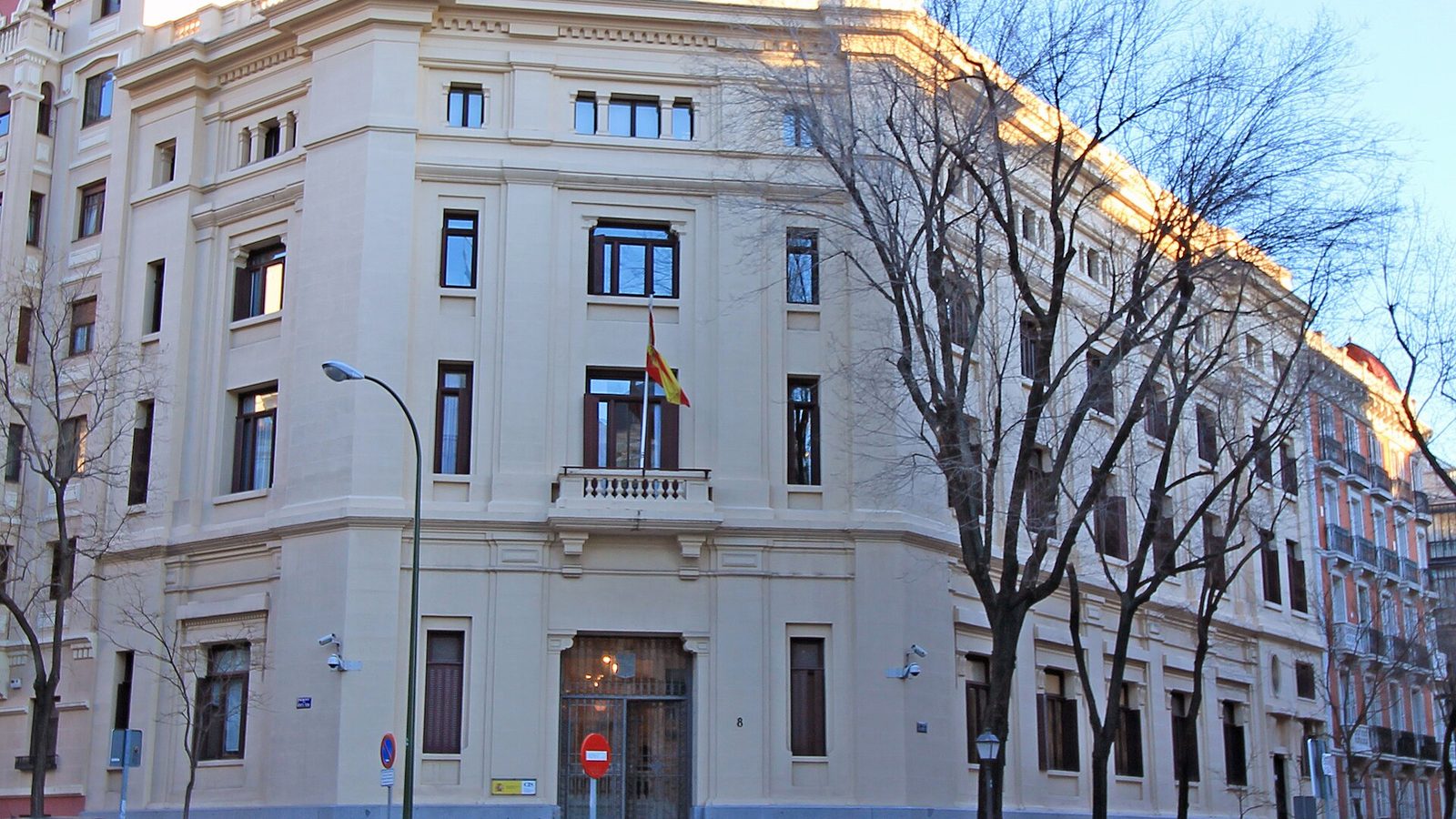
The CIS's September barómetro put the PSOE on 31.0% and the PP on 25.5%, a PSOE lead of 5.5 points. The 16 private pollsters in our average put the PP ahead by 6.0 points, on 32.3% to 26.4%. Both cannot be right on 29 November.
How far apart
Our house-effects page sets each poll against the other pollsters' polls of the same fortnight. Over 35 polls since September 2023, the CIS has shown the PP 5.7 points lower than other pollsters and the PSOE 4.2 points higher, about ten points on the gap between them. No other pollster comes close: the next largest difference on the PP is NC Report's, 1.9 points above the rest. Every CIS poll since late April 2024 has had the PSOE ahead. Our average has had the PP ahead throughout the parliament.
The CIS's polls also move about more than their samples of around 4,000 people imply. On our scatter measure, where 1 is what sampling alone would produce, the CIS scores 2.41, the only pollster above 1.6. Since April 2025 its PSOE figure has ranged from 27.0% to 36.4%.
What respondents told it
The CIS is unusually open. It prints its "voto directo", the party each respondent names, beside its estimate, which is why it gets 30 out of 30 for openness in our ratings. In September 23.3% of everyone asked named the PSOE, 18.3% the PP and 12.0% Vox, with 14.3% undecided. Counting only those who named a party or said they would vote blank, that is PSOE 30.6%, PP 24.1% and Vox 15.8% on our calculation. So the PSOE lead is already in the raw answers, at 6.5 points, and the CIS's estimate narrows it a little.
That points to the sample rather than the estimation. Target Point, a private pollster, reweighted the September sample by how respondents said they voted in 2023 and arrived at PP 31.9% and PSOE 26.8%, El Debate reported. It said 28.6% of the sample recalled voting PSOE, against 20.9% after its correction. That is one rival's reading, made without the microdata, and recalled vote is an imperfect guide in its own right.
Raw answers have not beaten the CIS's estimates in the past. We compared the direct vote, rescaled the same way, with the estimate in the CIS's last study before seven general elections. The estimate was closer at five of the seven, missing by 1.21 points per party on average against 1.39 for the raw figures.
The record
At the nine general elections since 2000 the CIS's final polls missed each main party, those with 5% of the vote or more, by 2.8 points on average, against 2.1 points for Spain's final polls as a whole. That earns it 19 of 50 for accuracy and an overall grade of C, 57 out of 100, helped by full marks for openness; it ranks 22nd of the 53 pollsters we rate in Spain. Its record swings. In 2023 its final poll, with fieldwork to 12 July, was among the closest of 22 final polls, 1.5 points out per main party, yet it had the PSOE ahead by 32.2% to 30.8% when the PP won by 33.1% to 31.7%. In November 2019 it was 4.0 points out per main party and put Vox on 7.9% against a result of 15.1%. In 2004 it was 6.0 points out, in 2011 1.6.
The CIS's defenders have a point about 2023. That year the final polls as a whole understated the PSOE by 3.3 points, and the CIS's PSOE figure was nearer the result than most. Across the eight elections the average final poll understated the PSOE by 1.3 points. A pollster that differs from the field is not necessarily wrong; the result decides.
What our projection does with it
Our average gives each pollster's latest poll within 30 days of the newest one equal weight, and makes no allowance for house effects. The CIS's September poll, with fieldwork to 4 September, has dropped out of that window, so it is not in today's average. Had it been included, the PP's lead would be about 5.3 points rather than 6.0 on our calculation. The CIS usually runs a large pre-election survey, with 16,000 to 29,000 interviews. When it is published it will count as one poll among the rest.
We also tested what happens if the CIS is right and everyone else is wrong. Moving our average by roughly its house effect on our what-if page, with the PP 5.5 points lower, the PSOE 4.0 points higher and Vox 0.5 points lower (the tool moves in half-point steps), makes the PSOE the largest party on 133 seats to the PP's 110. Vox would have 67, and the PP and Vox together 177, still a majority by one seat. The parties that invested Sánchez in 2023 would have 172.
Fifty-two contests
The other reason national shares say less than they seem is the seat law. The 350 seats are filled province by province with the D'Hondt method, and a list needs 3% of the province's valid vote. Most provinces are small: 29 elect five deputies or fewer, about three in ten of the Congreso's members between them. A list is sure of a seat whatever the others do only with more than 25% of the vote in a three-seat province, or 16.7% in a five-seat one. The 3% threshold binds only in Madrid and Barcelona.
The effect adds up. On today's average the PP turns 32.3% of the vote into 39.1% of the seats and the PSOE turns 26.4% into 30.9%. Vox, on 18.8%, gets 18.3%. Sumar's 6.2% wins 2.3% of the seats, Podemos's 3.2% wins two seats and SALF's 1.6% none. Parties concentrated in a few provinces do well: ERC turns 2.1% into 8 seats and EH Bildu 1.3% into 7. Splitting is costly. Sumar and Podemos standing apart win 10 seats between them, against 19 on one list.
The legal half of our model is exact: run on the official 2023 votes, it reproduces all 350 seats in all 52 provinces. The step from national polls to provinces is a proportional swing from 2023 and has not been backtested. It matters most at the margin. In 13 provinces the last seat turns on less than a point, and in Girona the PP is 0.05 points from one. That is one reason our 80% range for the PP, which also allows for polling error, runs from 123 to 149 seats.
Polling Forecast reads every poll in ten countries, corrects for how pollsters have missed before, and turns them into seats. Our forecasts, the polls and our methods are free to explore.
Elsewhere on Polling Forecast
 353 seats? The mega-poll's Labour majority comes from a split right, not tactical voting
Run the mega-poll's own vote shares through our model and Labour still gets 358 seats. The difference from our 316 is a weaker Conservative Party and a stronger Restore Britain, not the tactical voting the coverage focused on.
353 seats? The mega-poll's Labour majority comes from a split right, not tactical voting
Run the mega-poll's own vote shares through our model and Labour still gets 358 seats. The difference from our 316 is a weaker Conservative Party and a stronger Restore Britain, not the tactical voting the coverage focused on.
 North Carolina mail ballots trail 2022 pace equally for both parties
Measured against their own registered voters, North Carolina Democrats and Republicans are returning mail ballots at about 70 percent of their 2022 pace, with Maine ahead.
North Carolina mail ballots trail 2022 pace equally for both parties
Measured against their own registered voters, North Carolina Democrats and Republicans are returning mail ballots at about 70 percent of their 2022 pace, with Maine ahead.
 Polls understated PiS in 31 of 32 final surveys since 2024
At four national votes since Tusk took office, final polls put PiS or its candidate too low. Our forecast makes no allowance for it.
Polls understated PiS in 31 of 32 final surveys since 2024
At four national votes since Tusk took office, final polls put PiS or its candidate too low. Our forecast makes no allowance for it.