
Two Dan Sullivans on the ballot, and Alaska won't finish counting until November 18
A namesake on the ballot, a ranked-choice count that ends on November 18, and a fix to our own forecast: Mary Peltola now edges ahead of Senator Dan Sullivan.
 Polling Forecast
4 min read
data as of 30 October
Written in house from our poll data and our forecast.
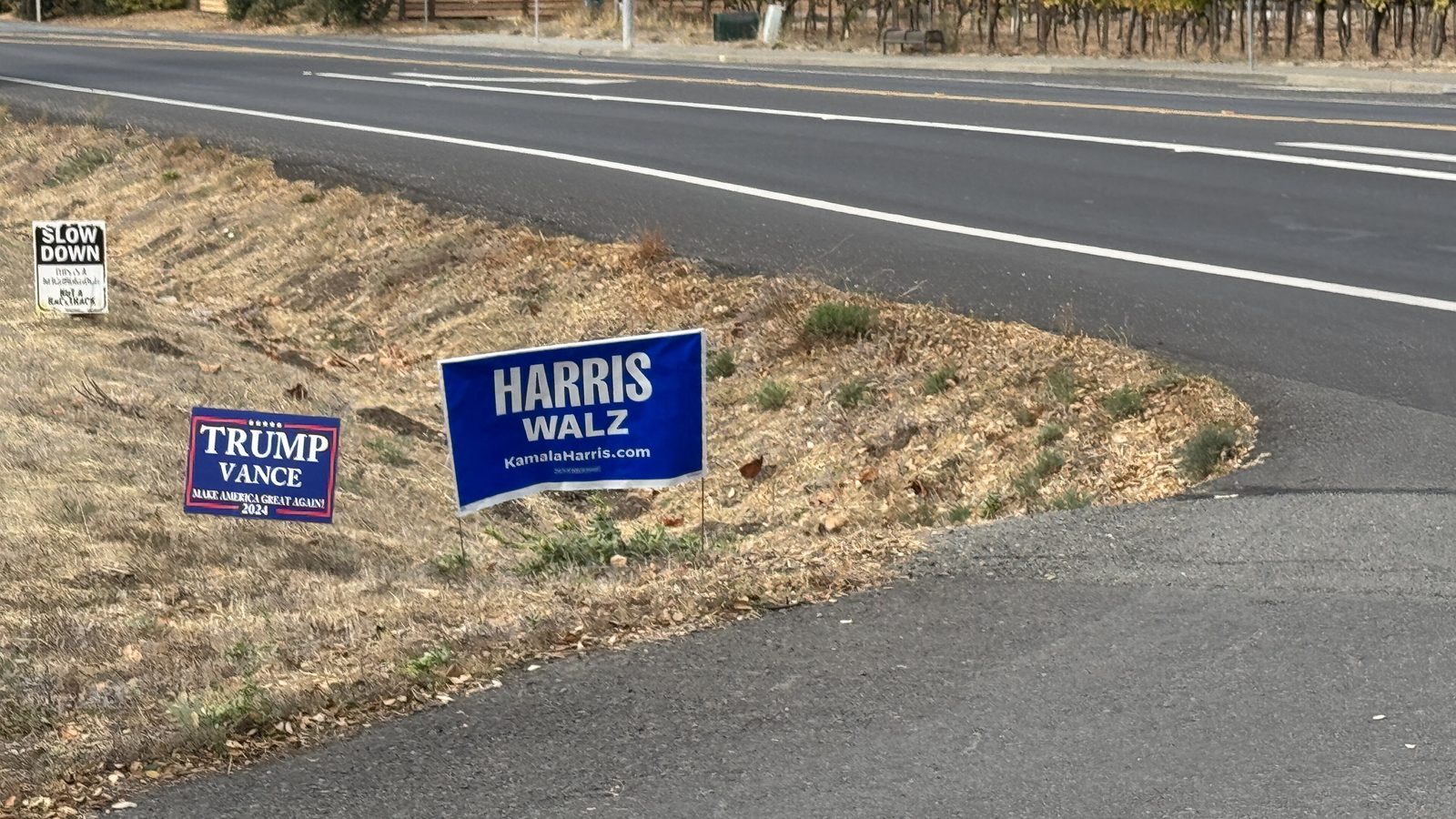

On Tuesday, Alaska voters will find two Dan Sullivans on their Senate ballot. One is the senator, Republican Dan S. Sullivan, who is seeking a third term. The other, listed as "Sullivan, Daniel J. Jr." with no party, is a retired teacher from Petersburg who filed three days before the deadline.
On October 28 the New York Times reported that members of Mary Peltola's campaign and senior aides at the Democratic Senatorial Campaign Committee helped push him into the race to pull votes from the senator, citing 12 sources, text messages and documents. Peltola's campaign says it "has no involvement with either Sullivan campaign," and the DSCC says it was "not involved with Dan J. Sullivan."
The race is close, and until today our own forecast had the two men mixed up. Here is what the polls show, what we got wrong, and why the result won't be known until November 18.
How he got on the ballot
The state Division of Elections ruled in June that Daniel J. Sullivan Jr. could not run. Anchorage Superior Court Judge Thomas Matthews reversed that decision on June 26, and the Alaska Supreme Court upheld his ruling. In the August 18 top-four primary the namesake won 4,107 votes, 2.5%, which put him third behind Peltola on 49.5% and the senator on 41.4%. That was enough to reach November. The ballot now lists him with no party and marks the senator as the incumbent.
What the polls show
Five pollsters have released Alaska Senate polls since the primary, and all five asked about the namesake. He takes between 1% and 7% of first choices:
- Rasmussen Reports, September 13 to 14: Sullivan 39, Peltola 39, Daniel J. Sullivan 7, Gerald Heikes 6.
- Fabrizio Ward and Impact Research, September 8 to 11: Peltola 46, Sullivan 41, Daniel J. Sullivan 4, Heikes 3.
- Alaska Survey Research, to September 12: Peltola 48, Sullivan 44, Daniel J. Sullivan 4, Heikes 4.
- co/efficient, September 14 to 17: Sullivan 48, Peltola 46, Daniel J. Sullivan 1, Heikes 1.
- Trafalgar Group, September 22 to 24: Sullivan 47, Peltola 46, Daniel J. Sullivan 3, Heikes 1.
Two of those polls ran the ranked-choice count to the end. Once Heikes and the namesake are eliminated, Peltola leads 53 to 47 in the Fabrizio Ward and Impact Research poll and 52 to 48 in Alaska Survey Research's. In the Fabrizio count, the namesake's voters split evenly between the two front-runners: the senator and Peltola each gained 2 points when he was knocked out.
What we got wrong
Until today our forecast treated Daniel J. Sullivan Jr. as the Republican incumbent. Our race page named him as the senator, and our poll average added his share to the senator's. In Alaska's top-four system we count every Republican on the ballot together, because their voters mostly rank one another next. That is a fair rule for Heikes, a Republican. It was wrong for the namesake, who appears on the ballot with no party and whose voters, in the one poll that followed them, did not lean either way.
The effect was not small. Rasmussen's 39 to 39 tie went into our average as a 14-point Republican lead, and Trafalgar's and co/efficient's polls leaned toward the senator by 3 points and 1 point too much. The two polls with a full ranked-choice count were not affected.
We have fixed both problems. Polls are now matched to each candidate by full name when two candidates share a surname, and the namesake's share counts for neither side. Rasmussen's poll now counts as the senator plus Heikes against Peltola, 6.6 points to the Republican side as published.
The fix moves the race. Before it, our forecast had Senator Sullivan narrowly ahead, winning well over half of our simulations. Now Peltola is narrowly ahead and wins just over half of them. It is still a toss-up, and still one of the handful of races most likely to decide control of the Senate.
Why the count takes until November 18
Alaska's first results arrive between 8:45 and 9 pm local time on election night, just before 1 am Eastern. They will show first choices only. With the namesake, Heikes and write-ins on the ballot, neither front-runner may reach the 50% of first choices needed to win outright, and a candidate under 50% on election night has not won anything yet.
Mailed ballots from within the United States count if they arrive by November 13, and ballots from overseas by November 18. The ranked-choice count runs on November 18, once the last of them is in, and the state aims to certify the result by November 25. If the Senate comes down to Alaska, America may wait more than two weeks to know who controls it.
Two more things on the ballot
Ballot Measure 2 would repeal ranked-choice voting and the top-four primary, and return Alaska to closed party primaries. This could be the last Senate race the state counts this way.
And Alaskans are voting early in record numbers: 58,168 had voted by the afternoon of October 27, more than all the early votes cast before the 2022 midterms. Registered Republicans made up 26.7% of in-person early voters and registered Democrats 18.4%. As we have written before, those figures tell you who has voted, not who is winning.
Polling Forecast reads every poll in ten countries, corrects for how pollsters have missed before, and turns them into seats. Our forecasts, the polls and our methods are free to explore.
Elsewhere on Polling Forecast
 353 seats? The mega-poll's Labour majority comes from a split right, not tactical voting
Run the mega-poll's own vote shares through our model and Labour still gets 358 seats. The difference from our 316 is a weaker Conservative Party and a stronger Restore Britain, not the tactical voting the coverage focused on.
 Polls understated PiS in 31 of 32 final surveys since 2024
At four national votes since Tusk took office, final polls put PiS or its candidate too low. Our forecast makes no allowance for it.
 Private polls understated Spain's PSOE at six of eight elections
104 of 142 private final polls since 2004 had the PSOE too low, but even a repeat of 2023 would probably leave the PP and Vox a majority.