
Red-state polls have overstated Democrats by 4 points since 2018
The Senate majority runs through Republican-leaning states where final polls have missed toward Democrats, and a scenario built on those misses cuts their chances to 42%.
 Polling Forecast
6 min read
Polling Forecast
6 min read
Written in house from our poll data and our forecast.
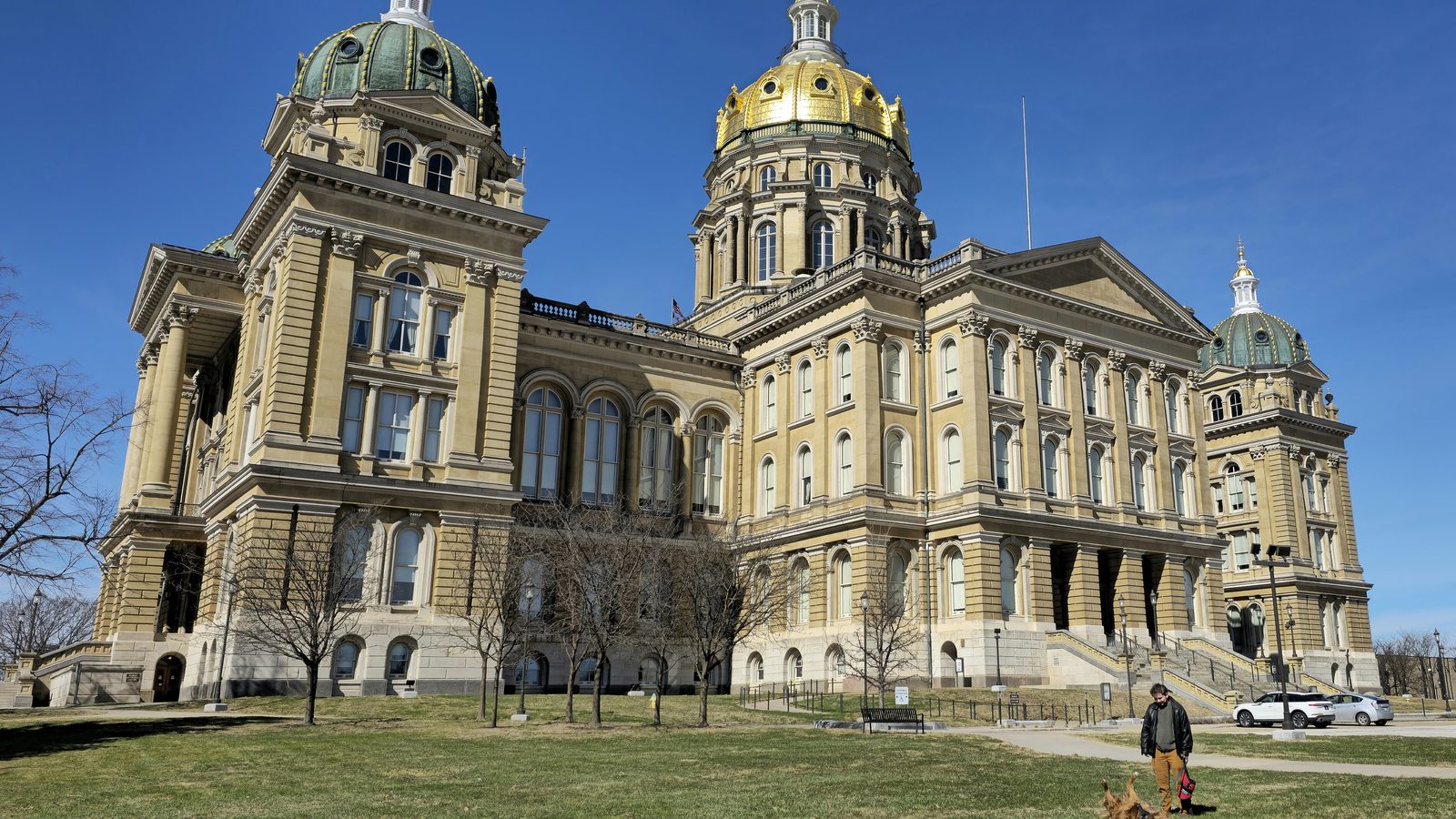

Since 2018, the final polls in America's most Republican states have overstated the Democratic margin by an average of 4.3 points. That matters this year more than most, because the Democratic path to a Senate majority runs almost entirely through Republican-leaning states.
Our forecast gives Democrats a 66% chance of winning control of the Senate. Beyond North Carolina and Maine, their likeliest gains are in Ohio, Texas, Iowa, Kansas and Alaska, five states that voted for Donald Trump by double digits. If the polls in those states miss the way they have in recent cycles, the picture changes. In a scenario that applies those recent misses to every race, the Democratic chance of control falls from 59% to 42%. That scenario is not our forecast. It is a test of how much the forecast leans on polls from places where polls have tended to run ahead of Democrats.
What we counted
We took every Senate and governor race since 2000 in our database that had final polls, 550 in all, and compared the average of those polls with the result. A positive miss means the polls showed the Democrat doing better than the Democrat did. We then sorted the races by how Republican or Democratic each state is, measured by how it voted for president compared with the nation.
Across the full period, the pattern runs in one direction. In states at least 15 points more Republican than the nation, final polls overstated Democrats by 2.9 points on average, across 173 races. In swing states the miss was 1.1 points. In states 5 to 15 points more Democratic it was 0.3 points, and in the bluest states polls slightly understated Democrats, by 0.4 points.
Since 2018 the slope has grown steeper. The reddest states missed by 4.3 points, states 5 to 15 points more Republican by 3.1, swing states by 0.7, and the bluest states by minus 1.0. Using only independent pollsters, or only races with three or more final polls, gives much the same answer.
Ohio, Iowa, Florida and Alaska
The averages hide state streaks that are hard to dismiss as chance. For these we used the simple average of nonpartisan final polls and counted presidential races too. In Ohio, from 2002 to 2012, the final polls for Senate, governor and president were almost perfectly centered: across ten races the average miss was 0.1 points. Since 2014 the polls have overstated the Democrat in all ten Ohio races, by 5.4 points on average. In 2018 Sherrod Brown led his final polls by 15 points and won by 6.8. In 2024 the polls had him level with Bernie Moreno, and he lost by 3.6.
Iowa shows the same break. Before 2014 its misses went both ways. Since then the polls have overstated Democrats in all ten races, by 5.8 points. In 2020 Theresa Greenfield led Joni Ernst by 1.5 points in the final polls; Ernst won by 6.6. Florida has a run of nine out of nine since 2014, averaging 5.0 points. In 2022 Marco Rubio led his final polls by 7.9 points and won by 16.4.
Alaska is the longest streak in the data: polls have overstated Democrats in all 12 races with final polling since 2004. Alaska is also thinly polled, often with one or two surveys at the end, so each miss rests on little. In 2020 Dan Sullivan led Al Gross by 2.9 points in the final polls and won by 12.7.
Nevada flipped, Colorado and New Mexico did not
The pattern is not fixed, and Nevada shows it. From 2004 to 2018 the final polls understated Democrats in 13 of 14 Nevada races. In 2010 Sharron Angle led Harry Reid by 3.6 points in the final polls; Reid won by 5.7. Since 2020 the direction has reversed, with Democrats overstated in all five races. In 2024 Jacky Rosen led by 7.7 points in the final polls and won by 1.7.
Colorado and New Mexico are the cases running the other way. Polls understated Democrats in 14 of 18 Colorado races since 2002, by 1.4 points on average, and in 10 of 16 New Mexico races, by 1.7. In 2018 Martin Heinrich led his final New Mexico polls by 16 points and won by 23.6.
Others have seen parts of this. The American Association for Public Opinion Research found that 2020 presidential polls overstated Joe Biden's margin by 5.3 points in states Trump had won by more than five points in 2016, against 3.4 points in states Hillary Clinton had won by more than five, and said the cause was unclear. After 2024 the analyst Jim Ellis counted Republicans beating their polling average in 10 of 11 Senate races, with Florida the largest miss. What our data add is the length of the record across Senate and governor races, the timing of the break in particular states, and what it means for this year's map.
What it means for November
The scenario works like this. For each Senate and governor race, we shifted the poll average by the average miss since 2018 for states in its band, scaled by how much weight the polls carry in that race. We also removed the smaller adjustment our model already makes: it trims every Democratic margin by 0.7 points, half the average statewide miss of past cycles. Then we ran 20,000 simulations of the election. The same run without the shift gave Democrats a 59% chance of control, close to the 57% our site showed on 14 October.
With the shift, the Democratic chance of control falls to 42%, and the Republican chance rises from 36% to 54%. Kansas, where Adam Hamilton has drawn level with Roger Marshall, drops from a 47% Democratic chance to 26%. Iowa falls from 51% to 39%, Texas from 57% to 47%, Ohio from 64% to 51% and Alaska from 39% to 26%. Dan Osborn, the independent in Nebraska, falls from 38% to 16%. Races in swing states barely move, and those in Democratic-leaning states edge toward the Democrats.
The pull is concentrated because these races are tied together. In our data, when a state's Senate polls miss, its governor polls tend to miss the same way: after removing each year's national error, the correlation is 0.49. A red-state miss in Ohio is likely to show up in Iowa and Texas too.
The recent movement is also concentrated in these states. Among Republican-leaning races polled at least seven times by July, the poll averages have moved 2.3 points toward Democrats since 1 July, against 0.6 points in swing-state races. Our forecast gave Democrats a 37% chance of the Senate on 1 August and 40% on 1 September. It reached 62% on 1 October. New York Times and Siena College polls taken in late September and early October put James Talarico 6 and 4 points ahead in Texas, Brown 3 ahead in Ohio, Ashley Hinson 1 ahead in Iowa and the Kansas race level.
Why it may not repeat
The evidence for a red-state miss is real, but it is not steady. In 2024 the polls missed by more in swing and blue states than in the reddest ones. The slope since 2018 comes from 2018, 2020 and 2022, and from 2000 to 2008 there was no such pattern at all. Using errors from the whole 2000 to 2024 period instead of the recent cycles, the scenario puts Democratic control at 54%, not 42%.
Pollsters have also changed their methods since 2020, as Newsweek reported this month, and the Syracuse University political scientist Grant Reeher told the magazine that turnout was a primary unknown, and a little trickier to judge in a midterm. Nevada shows a state's record can reverse. And in some of the reddest states the record rests on few polls.
So the 42% is a stress test, not a prediction. Our headline forecast remains a 66% chance of Democratic control, with a likeliest outcome of 53 Democratic seats. What the record shows is that this forecast leans on polls in Ohio, Iowa, Texas, Kansas and Alaska, and that polls there have run ahead of Democrats for a decade: in every race since 2014 in Ohio and Iowa, in 8 of 10 in Texas and in 7 of 9 in Kansas.
Polling Forecast reads every poll in ten countries, corrects for how pollsters have missed before, and turns them into seats. Our forecasts, the polls and our methods are free to explore.
Elsewhere on Polling Forecast
 353 seats? The mega-poll's Labour majority comes from a split right, not tactical voting
Run the mega-poll's own vote shares through our model and Labour still gets 358 seats. The difference from our 316 is a weaker Conservative Party and a stronger Restore Britain, not the tactical voting the coverage focused on.
353 seats? The mega-poll's Labour majority comes from a split right, not tactical voting
Run the mega-poll's own vote shares through our model and Labour still gets 358 seats. The difference from our 316 is a weaker Conservative Party and a stronger Restore Britain, not the tactical voting the coverage focused on.
 Polls understated PiS in 31 of 32 final surveys since 2024
At four national votes since Tusk took office, final polls put PiS or its candidate too low. Our forecast makes no allowance for it.
Polls understated PiS in 31 of 32 final surveys since 2024
At four national votes since Tusk took office, final polls put PiS or its candidate too low. Our forecast makes no allowance for it.
 Private polls understated Spain's PSOE at six of eight elections
104 of 142 private final polls since 2004 had the PSOE too low, but even a repeat of 2023 would probably leave the PP and Vox a majority.
Private polls understated Spain's PSOE at six of eight elections
104 of 142 private final polls since 2004 had the PSOE too low, but even a repeat of 2023 would probably leave the PP and Vox a majority.