
56 of 59 final polls understated Tories against UKIP and Reform
At every general election since 2015 final polls put the Conservatives too close to the challenger on the right, by 3.5 points on average, though Wales broke the pattern.
 Polling Forecast
6 min read
Polling Forecast
6 min read
Written in house from our poll data and our forecast.
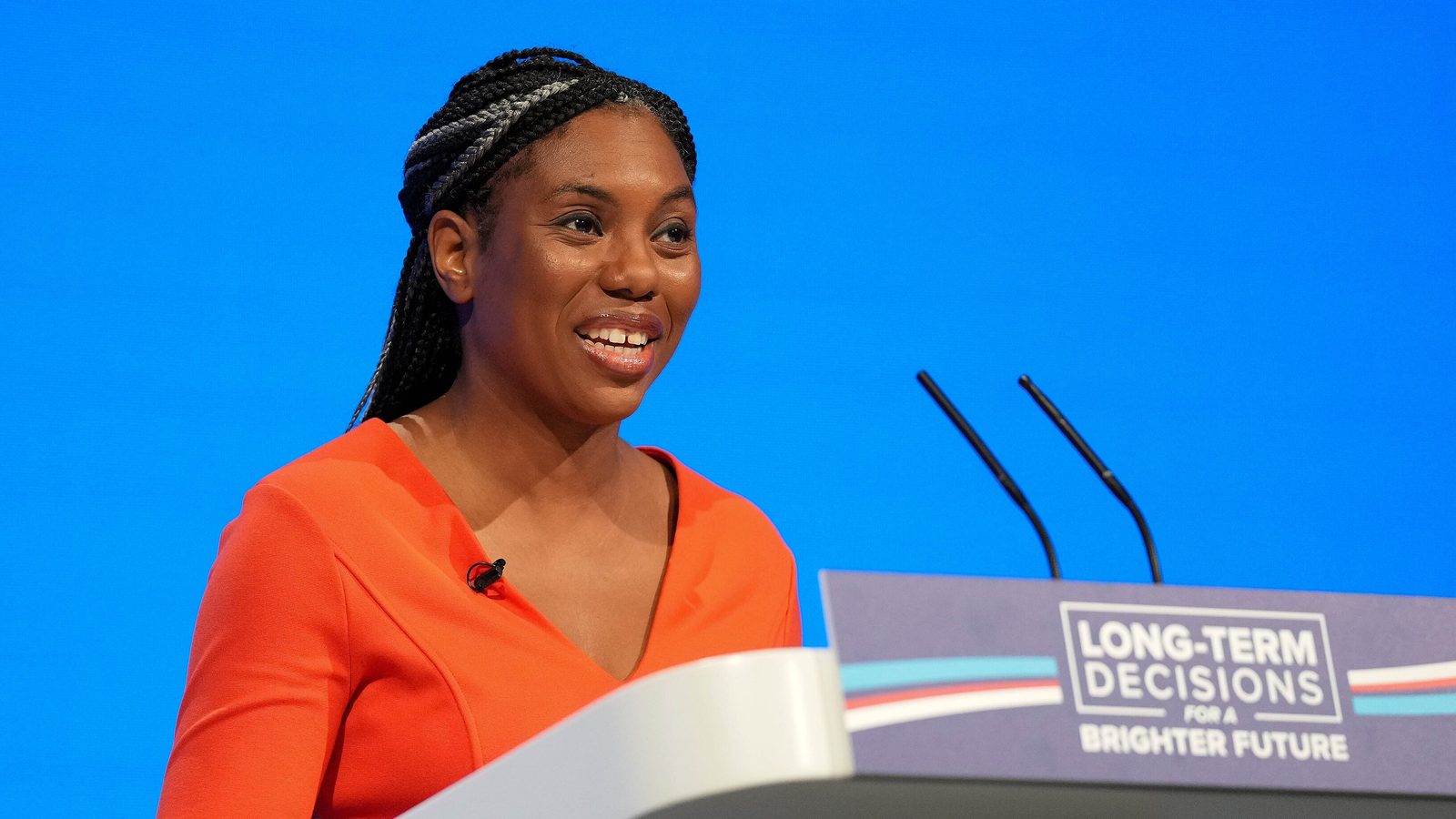

The last polls before each of the past four general elections put the Conservatives too close to the challenger party on the right. Of the 59 final polls we hold for 2015, 2017, 2019 and 2024, 56 understated how far the Conservatives would finish ahead of UKIP, the Brexit Party or Reform UK. Taking each election equally, the average miss was 3.5 points.
That runs against a common reading of polls in the Farage era: that the Reform vote is the one hiding from pollsters. Nigel Farage led the party in question at three of those four elections, UKIP in 2015, the Brexit Party in 2019 and Reform UK from June 2024. On the measure that decides the fight on the right, the polls erred the other way every time. With Reform 2.3 points ahead of the Conservatives in our current poll average, the historical miss is larger than today's lead.
What we counted
We took each pollster's final published voting-intention figures for Great Britain at each election, 58 polls, plus one telephone poll that Survation held back in 2015 and published the day after the vote. For each poll we subtracted the share for UKIP (the Brexit Party in 2019, Reform in 2024) from the Conservative share, and compared that gap with the same gap in the GB result, using official results from the UK Parliament's election database.
The misses by election were 3.6 points in 2015, 2.6 in 2017, 2.6 in 2019 and 5.1 in 2024. In 2015, 11 of 13 final polls understated the gap; in 2017, 11 of 11; in 2019, 13 of 13; in 2024, 21 of 22. The exceptions were small. Ipsos MORI's final 2015 phone poll had the Conservatives on 36 and UKIP on 11, a gap 0.2 points too wide. Survation's withheld 2015 poll was 1.2 points too wide. Number Cruncher Politics in 2024 was 0.3 points too wide.
The finding survives other cuts. Dropping the three final estimates that came from MRP models leaves 53 of 56 polls understating the gap. Leaving out 2024, the biggest miss, still leaves 35 of 37. For the 27 polls whose England figures we could rebuild from their tables, 24 understated the gap in England, by 3.1 points on average. The 11 telephone polls missed by less, 2.2 points on average, than the other 48, which missed by 4.1.
Four elections, one direction
The source of the miss moved from one election to the next. In 2015 UKIP was polled almost exactly, within a quarter of a point of its 12.9 per cent, and the error was all on the Conservatives, understated by 3.8 points. In 2017 the Conservative share was close, 0.3 points out, but UKIP was overstated by 2.4 points. In 2019 both played a part: the Conservatives 1.6 points too low, the Brexit Party 1.1 too high. In 2024 the same happened on a larger scale, with the Conservatives 3.4 points too low and Reform 1.6 too high. The British Polling Council's review of 2024 found an average Conservative error of minus 3.0 points and a Reform error of plus 1.6.
The 2024 finals show how wide the spread was. On average they had the Conservatives 4.6 points ahead of Reform. PeoplePolling put Reform ahead, on 20 to 16. Lord Ashcroft had the two parties a point apart, on 19 to 18. The Conservatives finished on 24.4 per cent and Reform on 14.7, a gap of 9.7 points.
Earlier work has looked at the parties one at a time. John Curtice, writing in spring 2025, concluded there was no systematic overstatement of the radical right in Britain: UKIP polled about right in 2015, was overstated in 2017, when it stood in only about three-fifths of seats, and Reform was overstated by just over 1.5 points in 2024. Looking instead at the gap between the two parties on the right gives one direction at all four elections.
Wales went the other way
The one recent test that broke the pattern was the Senedd election on 7 May. The six final polls we hold averaged 27.1 per cent for Reform, and it took 29.3. They had the Conservatives on 10.9, and the party won 10.7. The Conservative deficit to Reform was therefore 2.3 points larger than polled, and four of the six polls understated it. The election used a new closed-list system for the first time, and the largest miss was on Plaid Cymru, which polled 31.4 on average and won 35.4.
Scotland on the same day matched the general-election pattern. Eight final Holyrood polls averaged 17.4 per cent for Reform on the constituency vote, against a result of 15.8, and 11.2 for the Conservatives, against 11.8. Seven of the eight understated the Conservatives' position against Reform, by 2.3 points on average, and the regional list vote showed a 2.6-point miss in the same direction.
English local elections give a looser check. In the fortnight before 7 May our GB poll average had Reform 7.6 points ahead of the Conservatives, on 26.1 to 18.5. The projected national share from the count, as reported by the CIPD, put Reform on 26 and the Conservatives on 17, a nine-point gap. Local contests are not a general election and the projected share is an estimate, but they gave no sign of a hidden Conservative vote.
What it would mean now
Our GB poll average, with polls to 12 October, has Labour on 27.3, Reform on 23.1 and the Conservatives on 20.8. Pollsters differ on the order. YouGov's poll of 12 October had the Conservatives on 23 and Reform on 21; Opinium's of 9 October had Reform on 23 and the Conservatives on 20.
As a scenario rather than a forecast, suppose the polls miss the gap by the average 3.5 points again, split evenly between the two parties. The Conservatives would then stand at about 22.6 and Reform at 21.4. Run through our seat model, that gives the Conservatives 153 seats and Reform 37, against 136 and 57 with the polls as they stand. Labour stays largest in both, on 317 seats in the scenario and 314 now, short of the 326 needed for a majority.
Our published projection already leans the same way, more cautiously. It starts from what people told pollsters before their adjustments and removes half the average miss since 2015, which puts the Conservatives on 21.3 and Reform on 22.3, with 148 and 46 seats. Of the seven readings of past error on our what-if page, four put the Conservatives ahead of Reform on votes: the average miss, the 2015 and 2024 replays, and the pollster-record reading.
The limits
Four elections is a short record, and the challenger party was a different size each time: about 13 per cent in 2015, under 2 per cent in 2017 and 2019, and 15 per cent in 2024. In 2017 and 2019 a miss of one or two points on a party polling at three to five per cent drove much of the gap error. Reform now polls in the low 20s, a level none of its predecessors reached at a general election. Restore Britain, a newer party on the right, stands at 2.7 in our average and has no record at all.
Pollsters also change their methods after each miss. Find Out Now argued in July 2025 that most pollsters understate Reform, because their online panels hold too many politically engaged people and assume too high a turnout. Wales in May showed the error can run that way. What the record shows is narrower: at every general election since 2015, the final polls placed the Conservatives closer to the challenger on the right than the voters did.
Polling Forecast reads every poll in ten countries, corrects for how pollsters have missed before, and turns them into seats. Our forecasts, the polls and our methods are free to explore.
Elsewhere on Polling Forecast
 North Carolina mail ballots trail 2022 pace equally for both parties
Measured against their own registered voters, North Carolina Democrats and Republicans are returning mail ballots at about 70 percent of their 2022 pace, with Maine ahead.
North Carolina mail ballots trail 2022 pace equally for both parties
Measured against their own registered voters, North Carolina Democrats and Republicans are returning mail ballots at about 70 percent of their 2022 pace, with Maine ahead.
 Polls understated PiS in 31 of 32 final surveys since 2024
At four national votes since Tusk took office, final polls put PiS or its candidate too low. Our forecast makes no allowance for it.
Polls understated PiS in 31 of 32 final surveys since 2024
At four national votes since Tusk took office, final polls put PiS or its candidate too low. Our forecast makes no allowance for it.
 Private polls understated Spain's PSOE at six of eight elections
104 of 142 private final polls since 2004 had the PSOE too low, but even a repeat of 2023 would probably leave the PP and Vox a majority.
Private polls understated Spain's PSOE at six of eight elections
104 of 142 private final polls since 2004 had the PSOE too low, but even a repeat of 2023 would probably leave the PP and Vox a majority.