Did the carbon tax make Canadians poorer?
Not in cash terms. In its last full year, the average household in every province paying the federal charge got $98 to $664 more back in rebates than it paid. On the PBO's disputed estimate of the wider economic cost, it lost $150 to $400. It raised prices by about 0.7%, once.
 Polling Forecast
6 min read
data as of 23 November
Written in house from our poll data and our forecast.

The verdict
| Question | Our answer | How sure |
|---|---|---|
| Did the carbon tax make Canadians poorer? | Not in cash terms. In 2024-25, its last full year, the average household in every province that paid the federal fuel charge got more back in rebates than it paid, by between $98 in PEI and $664 in Saskatchewan, according to the Parliamentary Budget Officer. | Strong |
| What about the wider economic cost? | That turns a small gain into a small loss. Counting the PBO's estimate of lost wages and investment income, the average household was $152 to $399 a year worse off. Lower-income households still came out ahead; the top 40–60% did not. | Moderate |
| How much did it raise prices? | About 0.7% in total, once. When it was scrapped on 1 April 2025, petrol prices fell 10–14% in a month everywhere except Quebec, which never had the federal charge, and inflation dropped from 2.3% to 1.7%. | Strong |
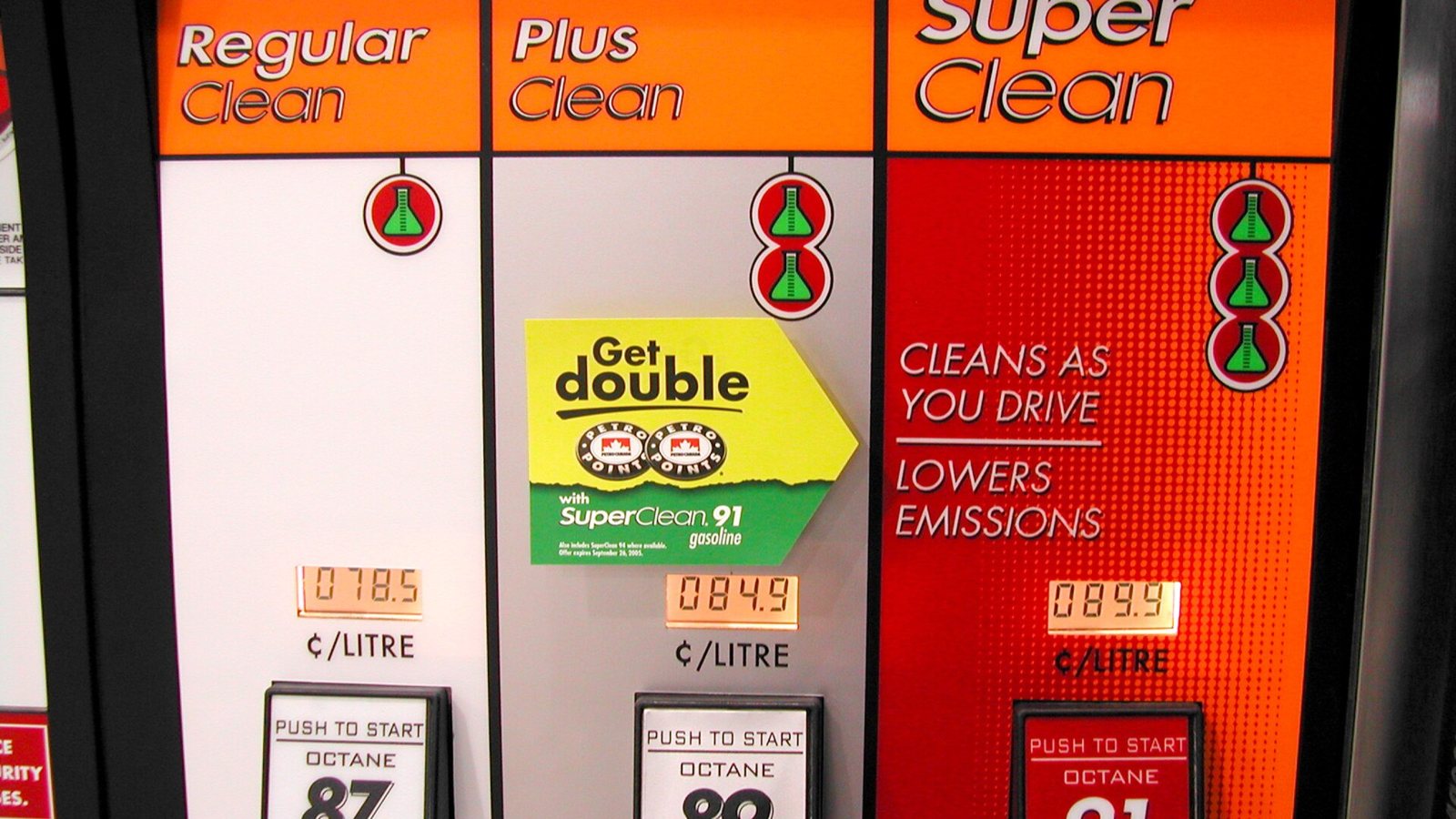
| So why did people think it cost them? | Because they saw the cost at the pump and not the rebate. In 2023, 54% of people receiving the rebate believed they paid more than they got back. | Strong |
"An expensive scam"
Few Canadian policies have been fought over as hard as the consumer carbon tax. Pierre Poilievre called it "nothing more than an expensive scam".1 Justin Trudeau's government defended it as the cheapest way to cut emissions, and pointed to the rebate that most households received four times a year.
On 14 March 2025, in his first act as prime minister, Mark Carney signed the directive to end it. "This will make a difference to hard-pressed Canadians," he said.2 Since 1 April 2025, there has been no federal charge on petrol, diesel or natural gas.
The carbon tax is gone, but the argument over whether it made people poorer has not gone away. We took the Parliamentary Budget Officer's household-by-household analysis and Statistics Canada's price figures from the month it ended.
1. Most households got more back than they paid
Source: Parliamentary Budget Officer
The federal fuel charge applied in the provinces without their own carbon price: Ontario, Manitoba, Saskatchewan, Alberta and the four Atlantic provinces. By 2024-25 it was $80 a tonne of carbon dioxide. Almost all the money went back to households as the Canada Carbon Rebate.
In 2024-25, the PBO estimated, the average household in Saskatchewan received $1,881 in rebates and paid $1,217 in fuel charges and the GST on them, directly and through higher prices for other goods. In Ontario it received $984 and paid $811. In PEI, the closest case, it received $767 and paid $669.3
Source: Parliamentary Budget Officer; Polling Forecast calculation
In every province, the average household came out ahead in cash: by $664 in Saskatchewan, $425 in Alberta, $338 in Newfoundland and Labrador, $173 in Ontario and $98 in PEI. Households paid between 65% and 87% of their rebate in costs (our calculation from the PBO's figures).3
2. The economic cost, and the argument about it
The PBO also estimated a second, wider cost: the wages and investment income households lose because a carbon price makes the economy slightly smaller. Including that, the average household was worse off in every province, by $152 in Manitoba up to $399 in Ontario.3
That estimate has a history. In April 2024 the PBO admitted that its earlier reports, the ones opponents quoted most, had wrongly included the cost of carbon pricing on heavy industry. Correcting it cut the estimated 2030-31 cost for an average Alberta household from $2,773 to $697.1 Climate economists also argue that the model compares the carbon tax with a world with no other climate policy and no climate damage, which flatters the alternative.4
Even on the PBO's model, the gain or loss depended on income. In Ontario in 2024-25, the poorest fifth of households came out $322 ahead and the next fifth $88 ahead, while the richest fifth lost $1,729.3
3. What happened to prices when it went
Source: Statistics Canada
Quebec makes a natural comparison, because it has its own cap-and-trade system and never paid the federal charge. Between March and April 2025, petrol prices fell by 13.5% in Ontario, 12.4% in Alberta and 13.7% in Manitoba. In Quebec they fell by 0.1% (our calculation from Statistics Canada data).5
Statistics Canada said the price decrease in April "was mainly driven by the removal of the consumer carbon price". National inflation fell from 2.3% to 1.7%.6 The Bank of Canada estimated that the tax had added about 0.7% to prices in total, including about 18 cents a litre on petrol, and that removing it would cut annual inflation by about 0.7 points for one year.7
Source: Statistics Canada
That is exactly what happened: a one-off drop in the price level. When April 2026 came round, the effect dropped out of the annual figures and inflation jumped back up, helped by a rise in world oil prices. In October 2026, inflation was 3.1%.5
Verdict: the carbon tax did not make most Canadians poorer in cash terms. The rebate more than covered what the average household paid in every province. On the PBO's disputed estimate of the wider economic cost, the average household lost a little, $150 to $400 a year, while lower-income households still gained. It raised prices by about 0.7% once, and scrapping it brought them down again, but took the rebate with it.
What the other side gets right
The economic cost is real in the PBO's model, and was growing. By 2030-31, with the charge planned to reach $170 a tonne, the PBO estimated a net cost of $457 to $903 for the average household, and said households in the top three income fifths would face a net cost.3
Averages hide the losers. Rural households who drive long distances, people heating with natural gas, and small businesses faced bigger costs. The rural top-up of 20% only partly made up for them.8
People didn't feel the rebate. In a 2023 Angus Reid survey, 54% of rebate recipients believed they paid more than they got back, including 60% in Alberta and 63% in Saskatchewan.9 A policy that leaves most people ahead but feels like a loss is a political failure, whatever the numbers say.
Scrapping it did not make people richer either. Most households lost a rebate worth more than the charge, and the fall in inflation was gone within a year.
What the public thinks
In an Angus Reid survey in January 2025, two months before it was scrapped, 45% wanted the carbon tax abolished, 15% wanted it kept but lowered, about 26% wanted it kept as it was and 15% wanted it to rise as planned.10
How we did it
Household costs and rebates are from the PBO's October 2024 update of its distributional analysis of the federal fuel charge, Appendix C, for 2024-25. The amount paid is the rebate minus the PBO's net fiscal gain; the economic loss is the difference between its fiscal and its fiscal-plus-economic estimates. Price changes are from Statistics Canada's consumer price index (table 18-10-0004), comparing March and April 2025 by province, with Quebec as the comparison because it kept its own carbon market.
Sources
-
CBC News, report on the corrected PBO analysis, 10 October 2024. https://www.cbc.ca/lite/story/1.7348421↩↩
-
CBC News, report on Mark Carney's directive ending the consumer carbon tax, 14 March 2025. https://www.cbc.ca/lite/story/1.7484290↩
-
Parliamentary Budget Officer, A Distributional Analysis of the Federal Fuel Charge: Update, 10 October 2024 (Polling Forecast analysis). https://www.pbo-dpb.ca/en/publications/RP-2425-017-S--distributional-analysis-federal-fuel-charge-update--analyse-distributive-redevance-federale-combustibles-mise-jour↩↩↩↩↩
-
Canadian Climate Institute, PBO's latest carbon pricing report has big flaws, 6 April 2023. https://climateinstitute.ca/pbos-latest-carbon-pricing-report-has-big-flaws-here-are-the-facts/↩
-
Statistics Canada, consumer price index by province (18-10-0004) (Polling Forecast analysis). https://www150.statcan.gc.ca/t1/tbl1/en/tv.action?pid=1810000401↩↩
-
Statistics Canada, Consumer Price Index, April 2025, The Daily, 20 May 2025. https://www150.statcan.gc.ca/n1/daily-quotidien/250520/dq250520a-eng.htm↩
-
Bank of Canada, How removing the consumer carbon tax affects inflation, Monetary Policy Report, April 2025. https://www.bankofcanada.ca/publications/mpr/mpr-2025-04-16/in-focus-1/↩
-
Finance Canada, Removing the consumer carbon price, effective April 1, 2025, 22 March 2025. https://www.canada.ca/en/department-finance/news/2025/03/removing-the-consumer-carbon-price-effective-april-1-2025.html↩
-
Angus Reid Institute, survey of 2,512 adults, 10 to 14 November 2023. https://angusreid.org/carbon-tax-perceptions-rebates/↩
-
Angus Reid Institute, survey of 2,012 adults, 24 to 27 January 2025. https://angusreid.org/centre-left-support-carbon-tax/↩
Polling Forecast reads every poll in ten countries, corrects for how pollsters have missed before, and turns them into seats. Our forecasts, the polls and our methods are free to explore.
Elsewhere on Polling Forecast
 Coalition candidate wins Lubuskie Senate by-election on 14% turnout
Zdzisława Różańska took 42.7% for the governing coalition, while our forecast still gives the right a Sejm majority in 86% of simulations.
 Schlein's wealth tax meets a cool reception from her allies
The PD leader revived a 2% levy on the largest fortunes as the centre-left leads our Camera projection with 224 seats and a majority in 63% of simulations.
 Merz enters budget week with the AfD almost six points ahead
The Bundestag votes on the 2027 budget on Friday, with the AfD on 26.7% in our average and the CDU/CSU on 21.0.