
Populist-right poll rises kept 82% at elections, other challengers 26%
In 29 mid-term poll climbs across nine countries, the populist right held most of its gain and others did not. One Nation's rise is the largest yet.
 Polling Forecast
6 min read
Polling Forecast
6 min read
Written in house from our poll data and our forecast.
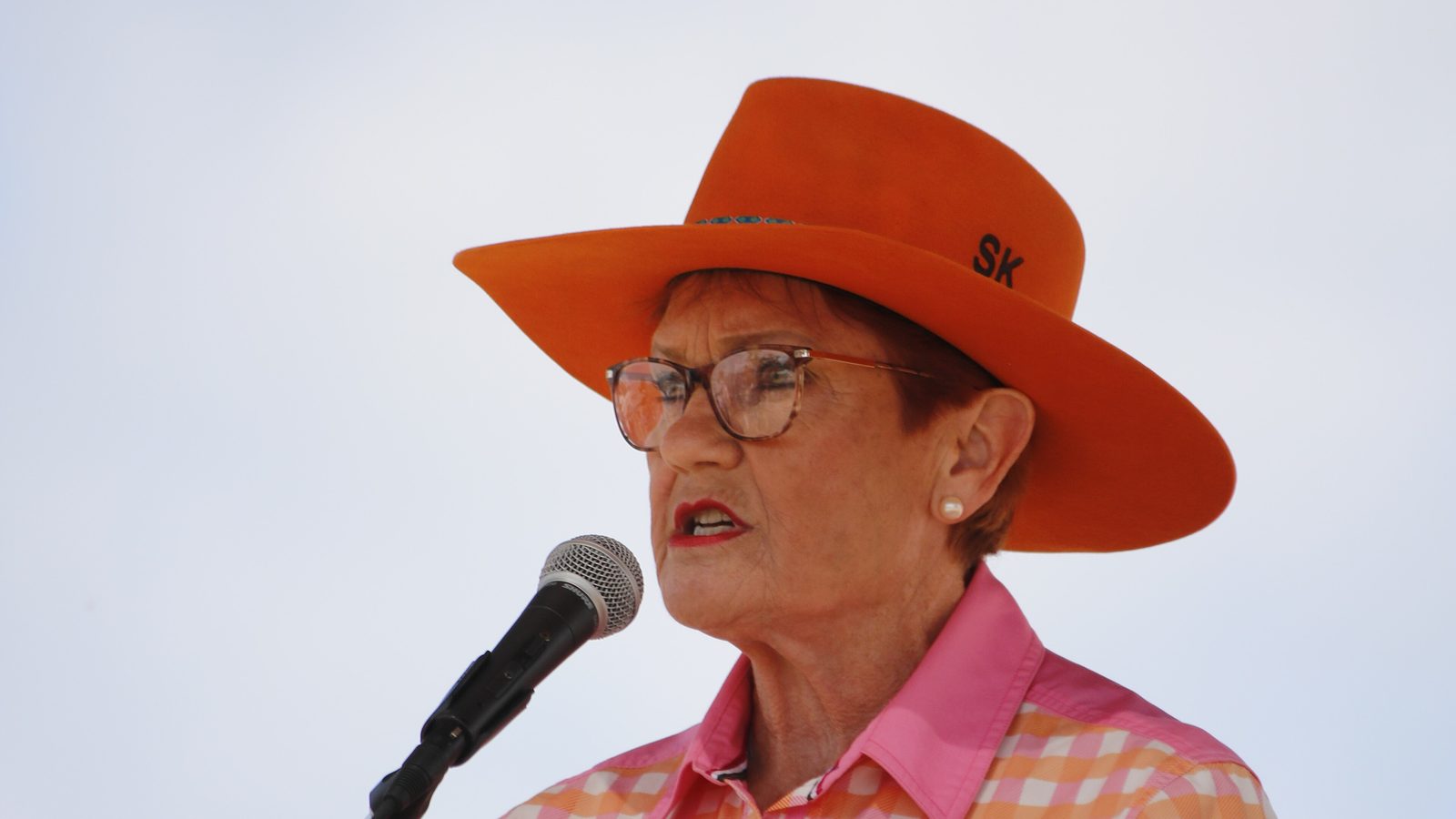

When a populist-right party climbs in the polls between elections, most of the gain is usually still there on polling day. Across 12 such climbs in our records, the median party kept 82% of its rise in the result. Seventeen comparable rises by other challenger parties, from greens and centrists to farmers' parties, kept a median of 26%. For One Nation, now on 26.5% in our Australian average against 6.4% at the 2025 election, the difference between those two paths is about 13 points of the primary vote.
How we counted
We took every election in our history tables for Australia, Britain, Canada, France, Germany, Italy, the Netherlands, Poland and Spain. For each party outside the two main blocs, we found its highest poll average at any of our checkpoints between six months and three years before the vote, and measured that peak against the party's result at the previous election. We kept rises of six points or more, dropped checkpoints with fewer than three polls, and dropped any checkpoint that fell before the previous election had even taken place. Then we asked what share of the peak gain survived into the result.
That last rule changed the count. Our discovery pass had 13 populist-right cases and 18 others; two Dutch rises, JA21 and the Farmer-Citizen Movement (BBB) before the 2025 election, had been measured from polls taken in 2022 and 2023, before the 2023 election that set their baseline. Removing them leaves 12 and 17. The Dutch GroenLinks-PvdA alliance, whose earlier figures add the two parties together, counts as a main party and is outside the test. New Social Contract rose and fell inside the last four months of 2023 and had no previous result, so it is outside it too. The gap between the two groups would arise by chance about one time in 25 (a Mann-Whitney test gives p=0.04).
The cases
Brothers of Italy is the clearest example. It polled 20.8% six months before the 2022 election, 16.4 points above its 2018 result, and won 26.0%. The League did the same in 2018, rising from 4.1% to 14.7% and finishing on 17.4%. The AfD reached 21.1% in our average 18 months before Germany's 2025 vote and took 20.8%. UKIP kept three-quarters of its rise in 2015, and Reform UK finished on 14.7% in 2024, above its polling six months out.
The other challengers mostly faded. BBB polled 18.9% six months before the 2023 Dutch election and won 4.7%. Ciudadanos stood at 27.0% a year before Spain's April 2019 vote and won 15.9%. The German Greens peaked at 22.5% two years before 2021 and won 14.8%. The SDP-Liberal Alliance hit 43.1% in Britain's polls 18 months before the 1983 election and finished on 26.0%. Only Canada's New Democrats in 2004 kept their whole gain.
The pattern is a tendency, not a rule. Five of the 12 populist-right rises kept less than 40%: Marine Le Pen in 2017, and three Dutch cases, the PVV in 2017 and 2025 and Forum for Democracy in 2021. One Nation's own last climb is among them. It polled 8.9% in our average late in 2017, up from 1.3%, and won 3.1% in 2019, keeping 23% of the gain. That figure is partly an artefact: One Nation's own statement says it ran five candidates in New South Wales's 47 seats and four in Victoria's 38 that year.
We tested the result several ways. Leaving Britain out, the medians are 63% and 20%. Counting only rises of eight points or more, they are 89% and 26%. Measuring how far each party finished below its peak, the populist right gave back a median 2.1 points and the others 10.1. The finding is weakest if BBB is classed as populist right, as some researchers do: the medians become 75% and 32% and the gap is no longer clear of chance. It also narrows to 82% against 44% if only checkpoints six to 18 months out are used.
What it means for One Nation
One Nation's rise is larger than any populist-right climb in our records. Our average peaked at 29.8% in the week to 21 June 2026, 23.4 points above its 2025 result; Brothers of Italy's 16.4 points is the next largest. It has since eased to 26.5%, so it has kept 86% of its peak gain so far. If it behaves like the median populist-right party, it would finish near 25.6%. If it behaves like the median challenger of any other kind, it would finish near 12.5%.
The next federal election is due by 20 May 2028 if the House and half the Senate vote together, and the latest date for a House-only election is 23 September 2028. That puts Australia about 19 months out, inside the window we tested. Our projection today gives One Nation 64 seats, Labor 57 and the Coalition 13, with a hung parliament in 95% of our simulations. Labor stands on 27.7% and the Coalition on 21.4%.
The latest polls point down for One Nation. Roy Morgan, polling from 28 September to 11 October, had it on 24%, down 1.5 points. DemosAU's mega-poll of almost 10,000 voters, published on 11 October, put it on 26%, four points lower than in its May to July model, and on 34% in rural and regional seats, down from 41%. Newspoll had it on 28% in early October and Resolve on 25%, both two points lower than a month earlier; a move of that size in one poll is within normal scatter, but the direction is shared. YouGov still had One Nation ahead of Labor, 28% to 25%. Against that, the party has won real votes this year: 22.9% and four seats at the South Australian election in March, and the Farrer by-election in May, where David Farley took 39.5% of the primary vote.
Leading is not winning
Keeping a vote is not the same as coming first. Ten parties from outside the main blocs led our poll average six months or more before an election. Two came first: the Five Star Movement in 2018 and Brothers of Italy in 2022. On average the ten finished 8.8 points below their peak. The PVV led the Dutch polls by 14.2 points 18 months before the 2025 election, polled 30.2% at that point, won 16.7% and finished second to D66 by 0.3 points. Of the four populist-right cases in that group, only Brothers of Italy won. One Nation led our average in June and at times in September and October; today it trails Labor by 1.2 points.
Australian analysts add reasons for caution. Peter Brent wrote in Inside Story in June that One Nation's lead was "in primary votes only" and that preferences "are no less important than they ever were". Kevin Bonham reported in May that when one poll asked about Pauline Hanson retiring, One Nation lost a quarter of its support, from 28% to 21%. Ben Raue of The Tally Room wrote in December that seat estimates built on One Nation's preference flows in just two seats in 2025 should be taken with "an enormous pile of salt".
Limits
These are 29 cases across nine countries and 66 years, and the label "populist right" is a judgment; BBB shows how much one classification can move the result. Our checkpoints are fixed dates, so a peak between them is missed. And no party in the set rose as far as One Nation has, so the comparison stretches past the edge of the evidence. What the record does say is that populist-right gains have been harder to wish away than the rises of other newcomers, and that leading the polls a year and a half out has rarely been enough.
Polling Forecast reads every poll in ten countries, corrects for how pollsters have missed before, and turns them into seats. Our forecasts, the polls and our methods are free to explore.
Elsewhere on Polling Forecast
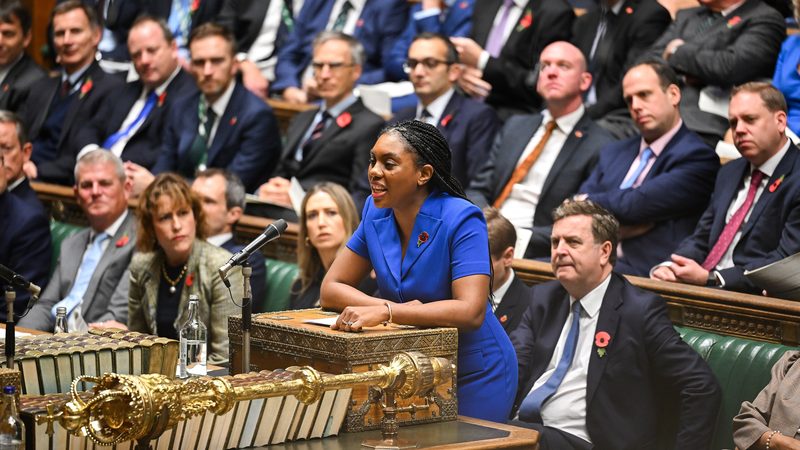 353 seats? The mega-poll's Labour majority comes from a split right, not tactical voting
Run the mega-poll's own vote shares through our model and Labour still gets 358 seats. The difference from our 316 is a weaker Conservative Party and a stronger Restore Britain, not the tactical voting the coverage focused on.
353 seats? The mega-poll's Labour majority comes from a split right, not tactical voting
Run the mega-poll's own vote shares through our model and Labour still gets 358 seats. The difference from our 316 is a weaker Conservative Party and a stronger Restore Britain, not the tactical voting the coverage focused on.
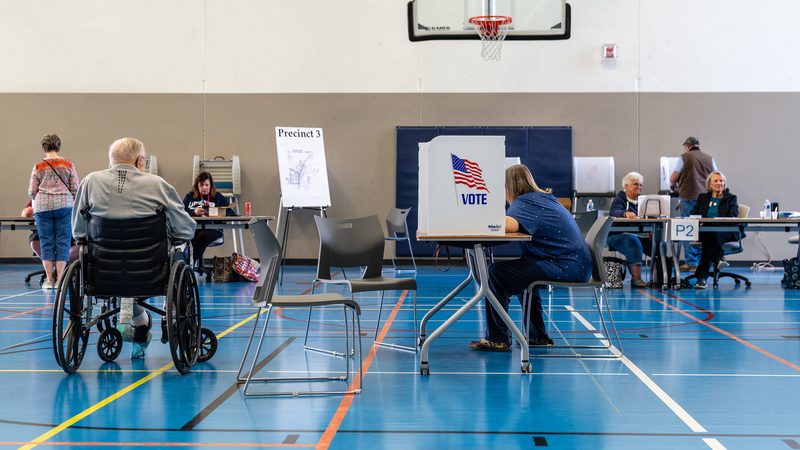 North Carolina mail ballots trail 2022 pace equally for both parties
Measured against their own registered voters, North Carolina Democrats and Republicans are returning mail ballots at about 70 percent of their 2022 pace, with Maine ahead.
North Carolina mail ballots trail 2022 pace equally for both parties
Measured against their own registered voters, North Carolina Democrats and Republicans are returning mail ballots at about 70 percent of their 2022 pace, with Maine ahead.
 Polls understated PiS in 31 of 32 final surveys since 2024
At four national votes since Tusk took office, final polls put PiS or its candidate too low. Our forecast makes no allowance for it.
Polls understated PiS in 31 of 32 final surveys since 2024
At four national votes since Tusk took office, final polls put PiS or its candidate too low. Our forecast makes no allowance for it.