Poland plans a no-fly zone along its eastern border
The defence ministry wants it in place by early January, after Russian missiles struck south-eastern Poland on 20 November.
 Polling Forecast
3 min read
data as of 26 November
Written in house from our poll data and our forecast.
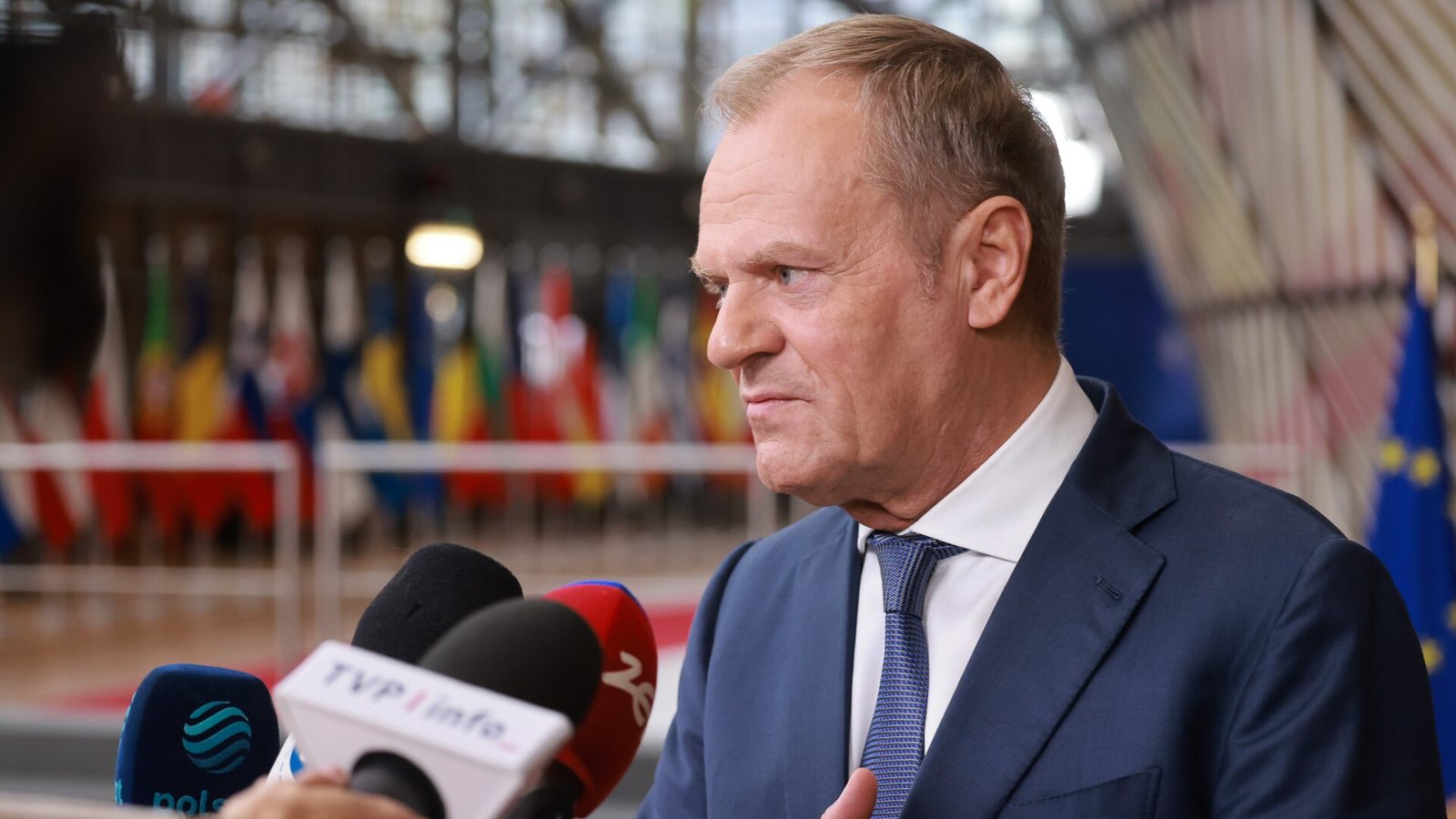
Poland's defence ministry will ask the government to set up a no-fly zone along the country's eastern border, deputy defence minister Cezary Tomczyk said on Wednesday. The zone would run "a dozen or a few dozen kilometres from the border", the regulation would be prepared in the coming weeks, and he hopes it will be in force by the end of December or early January (Notes from Poland).
The plan follows the three Russian missiles that hit south-eastern Poland on 20 November and a Russian drone that crossed into Polish airspace for a few minutes on 23 November. NATO has agreed to send an AWACS surveillance aircraft (Notes from Poland). Tomczyk said NATO was not in favour of shooting down missiles over Ukraine and did not confirm a report that Poland had raised the idea. Mariusz Błaszczak of PiS, a former defence minister, called the plan a "cosmetic measure" and said existing rules already allow a temporary no-fly zone (Notes from Poland).
How voters have judged the response so far
Opinion on the government's handling of the strikes is split almost evenly. In a United Surveys poll for Wirtualna Polska, 45.0% rated the response positively and 44.6% negatively (Polsat News). That is one poll, and the difference between the two figures is well inside its margin of error.
Party support has moved little. Donald Tusk's KO is on 32.5% in our average, down 0.6 points over the last week of polling, and PiS is on 22.2, up 1.0. Konfederacja is on 13.9, Grzegorz Braun's KKP on 8.9 and Lewica on 7.2. A move of a point or so in an average like this is within the normal scatter of polling, and the polls in it were mostly taken before or just after the strikes.
What our forecast says
The bigger question for the government is arithmetic, and it has not changed. On our numbers KO would win 189 seats, the largest party by far, but Tusk's coalition would have 213 in all and keeps its majority in only 9% of our simulations. Two of its partners are below the 5% threshold: PSL on 3.4% and Polska 2050 on 1.7. PiS, Konfederacja and KKP would have 247 seats together, past the 231 needed, and reach a majority in 87% of our simulations.
The parties near the threshold
Small parties matter a great deal to that arithmetic. Lewica, on 7.2%, clears the 5% threshold in 85% of our simulations. Below the line, Rozwój Plus is on 4.7% and Razem on 4.4, close enough that a point either way would change how many seats the larger parties share out. If PSL or Polska 2050 recovered past 5%, the governing side's total would rise; if they stay under it, their votes elect no one.
The polls also differ on the size of KO's lead. The newest one in our average, by United Surveys and finished on 22 November, has KO on 33.1 and PiS on 19.0, with Konfederacja on 14.9 and KKP on 10.7. That puts PiS more than three points below our average, and KKP almost two points above it.
What is uncertain
There is not yet enough polling since 20 November to say whether the strikes have changed how people intend to vote. The no-fly zone itself still needs a government regulation. The next Sejm election is due by November 2027, almost a year away, and our forecast will follow the polls as they come in. Every party against the threshold.
Polling Forecast reads every poll in ten countries, corrects for how pollsters have missed before, and turns them into seats. Our forecasts, the polls and our methods are free to explore.
Elsewhere on Polling Forecast
 Con Santiago Abascal en Espejo Público 24·02·2026 - 55114013870
Four leaders, five blocks and no polls: Spain's last debate
Sánchez, Feijóo, Abascal and Colau meet at 22:00 with the PP two points ahead in our average and polls banned until Sunday night.
 Queue to vote, Merri-bek, 2025 federal election
More than a third of Victoria has voted before Saturday
Early votes reached 35.1 per cent of enrolment by Tuesday night, ahead of 2022's pace, as the campaign enters its last two days.
 Elections Canada polling station sign, 2025
Advance voting opens Friday in six federal by-elections
Voters in three Quebec ridings, two in Ontario and one in Saskatchewan can vote from 27 to 30 November, ahead of polling day on 7 December.