Bundestag passes a record 2027 budget by 317 votes to 260
Spending rises to 556 billion euros and borrowing to more than 210 billion, while the governing parties stand at 34.1% in our average.
 Polling Forecast
2 min read
data as of 28 November
Written in house from our poll data and our forecast.

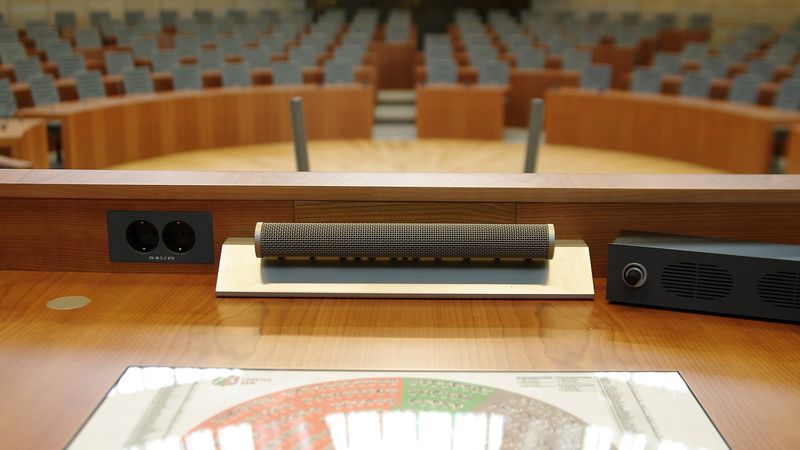
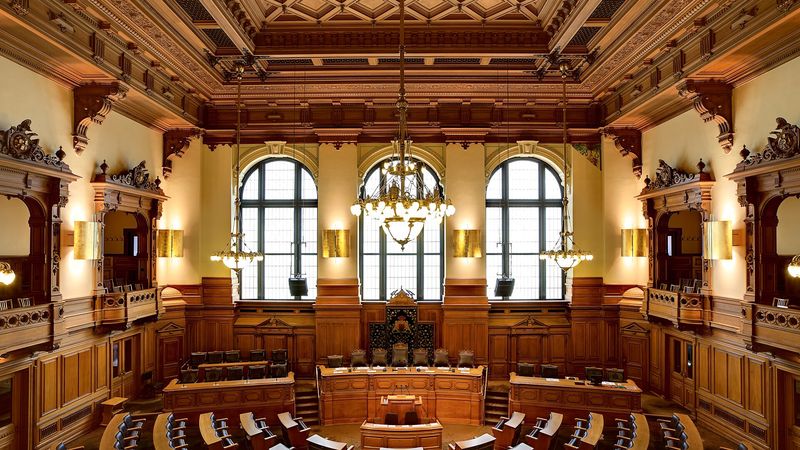
The Bundestag passed the federal budget for 2027 on Friday by 317 votes to 260 in a roll-call vote, with no abstentions (ZDF). The budget allows spending of 555.94 billion euros, the largest in the country's history (Bundestag). On Wednesday the chancellery's section had passed by 317 votes to 267.
What is in it
Spending is about 6% higher than this year. Net borrowing in the core budget rises from 98 to 123 billion euros, and with the two special funds for infrastructure and the Bundeswehr the federal government's new borrowing comes to more than 210 billion (ZDF). More than a third goes to the labour and social affairs ministry, which pays the federal contribution to pensions. Defence spending rises to almost 140 billion euros, and Ukraine receives 12 billion. The coalition parties dropped cuts to housing benefit and other social payments that the government had first planned.
Lars Klingbeil, the SPD finance minister, defended the borrowing as money for investment and said 2027 had to become "the year of private investment". He also warned that the 2028 budget would be harder. The economist Gabriel Felbermayr, a member of the German Council of Economic Experts, told Reuters that the budget filled gaps in the short term but lacked a long-term perspective, according to ZDF.
What the polls say
Voters were sceptical before the vote. In the ZDF Politbarometer by Forschungsgruppe Wahlen, taken from 24 to 26 November, 59% said they were against borrowing on this scale and 35% were in favour.
The two governing parties would win fewer seats than in 2025 on our numbers. The CDU/CSU is on 20.1%, down 0.9 points over the last week of polling, and the SPD on 14.0, up 0.3, a combined 34.1. The AfD is on 27.7, up 1.0, which puts it 7.6 points ahead of the Union. The Greens are on 15.3 and the Linke on 10.0.
Our forecast gives the AfD 200 seats, the Union 146, the Greens 110, the SPD 101 and the Linke 72. The Union and SPD together would have 247, against the 328 they won in 2025 and short of the 316 needed for a majority. With the Greens the three parties reach a majority in 96% of our simulations. The FDP, on 4.3%, clears the 5% threshold in 32% of our simulations and the BSW, on 3.3, in 5%.
What it could change
Passing the budget removes one source of risk for the coalition this winter. It does not settle the fight over borrowing, which the opposition and some economists will carry into the 2028 budget. The AfD's one-point gain over the week came from a handful of polls and is within the range that polls move from week to week; the next Politbarometer and INSA polls will show whether it holds.
The next Bundestag election is not due until March 2029 at the latest, so our forecast describes what today's polls would mean, not what will happen then. Before that, the AfD's Ulrich Siegmund stands for premier in Saxony-Anhalt in December.
Polling Forecast reads every poll in ten countries, corrects for how pollsters have missed before, and turns them into seats. Our forecasts, the polls and our methods are free to explore.
Elsewhere on Polling Forecast
 Jess Wilson electorate office, 2026
Coalition wins Victoria and Ben Carroll loses his own seat
Jess Wilson will be premier after Labor's primary vote fell to about 18%; One Nation was second on early counting but led in only a handful of seats.
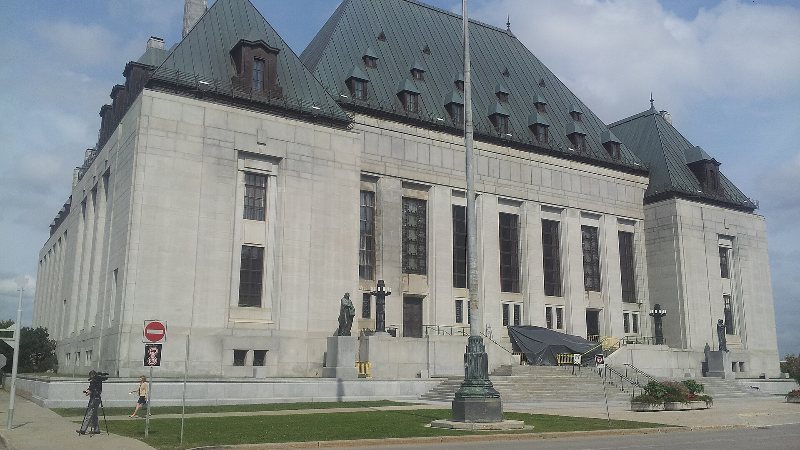 Supreme Court of Canada, Wellington Street, Ottawa
Supreme Court upholds most of Quebec's Bill 21
The court found Quebec validly used the notwithstanding clause; the Bloc is on 6.1% and 22 seats in our projection, the Liberals on 44.5%.
 Karol Nawrocki Andrzej Domański IMG 2493
Nawrocki vetoes the government's middle-class tax cuts
The reform was due to take effect in 2027, an election year; KO leads on 32.5% in our average, but the right wins a majority in 87% of simulations.