How German federal elections work
Germany's bundestag election (25 March 2029) explained: who is elected, how the 630 seats of the Bundestag are shared out, and how to read our forecast, which today has AfD 193 seats.
Two votes
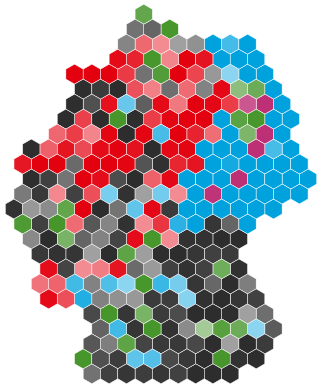
The Erststimme picks a local candidate in one of 299 Wahlkreise. The Zweitstimme picks a party list, and it decides how many seats each party gets.
630 seats, 5% to get in
The Bundestag has 630 seats, 316 for a majority. Only parties with 5% of Zweitstimmen, or three Wahlkreis wins, share them (parties of national minorities, like the SSW, are exempt). Seats are shared by Sainte-Laguë, then between each party's Land lists.
Winners without seats
Since the 2023 reform there are no overhang seats. If a party wins more Wahlkreise in a Land than its Zweitstimmen give it seats, its winners with the lowest shares don't sit. In 2025 that happened to 23 winners.
When
Every four years; the next is due by spring 2029. An early election needs the Chancellor to lose a vote of confidence and the President to dissolve the Bundestag, as in 2025.
Coalitions
No party has won a majority alone since 1957, so the Chancellor is elected by a coalition. The CDU/CSU rules out working with the AfD.
Polls in Germany
Germany has no legal register of polls. Most pollsters publish a headline projection; Forschungsgruppe Wahlen also publishes its raw "Stimmung". Our method →
Figures as of . Published by Polling Forecast.
 France
 Spain
 Italy
 Netherlands
 Poland
 Canada
 Australia