
Did the Superbonus pay for itself?
No, not even close. The 110% building bonus cost about €165bn, and on the Bank of Italy's figures roughly a third came back in tax. It renovated fewer than one home in 25, at the highest cost per unit of energy saved of any scheme the EU's auditors checked, and is still keeping Italy under EU deficit rules.
 Polling Forecast
7 min read
data as of 23 November
Written in house from our poll data and our forecast.

The verdict
| Question | Our answer | How sure |
|---|---|---|
| Did the Superbonus pay for itself? | No, not even close. Istat puts its cost to the deficit at more than €150bn in 2020–23, and about €165bn over its lifetime. On the Bank of Italy's figures, roughly 32 cents came back in tax for every euro spent (our calculation). The Bank of Italy rules out self-financing in so many words. | Strong |
| Is it still costing money? | Yes. Late credits of about €8.4bn pushed Italy's 2025 deficit to 3.1% of GDP instead of 2.7%, according to the economy ministry. That kept Italy in the EU's excessive-deficit procedure. | Strong |
| What did Italy get for it? | About 3.7% of its homes renovated, at around €98,000 each. The scheme saves 16.2 TWh of energy a year, but at €9.72 per kWh of annual saving it was by far the costliest scheme the European Court of Auditors examined. | Strong |
| Was it mostly fraud? | No. About €15bn of irregular credits were found across all the building bonuses, and early checks found most of the fraud in other bonuses, not the Superbonus. The cost comes from the design. | Moderate |
The 110% bonus
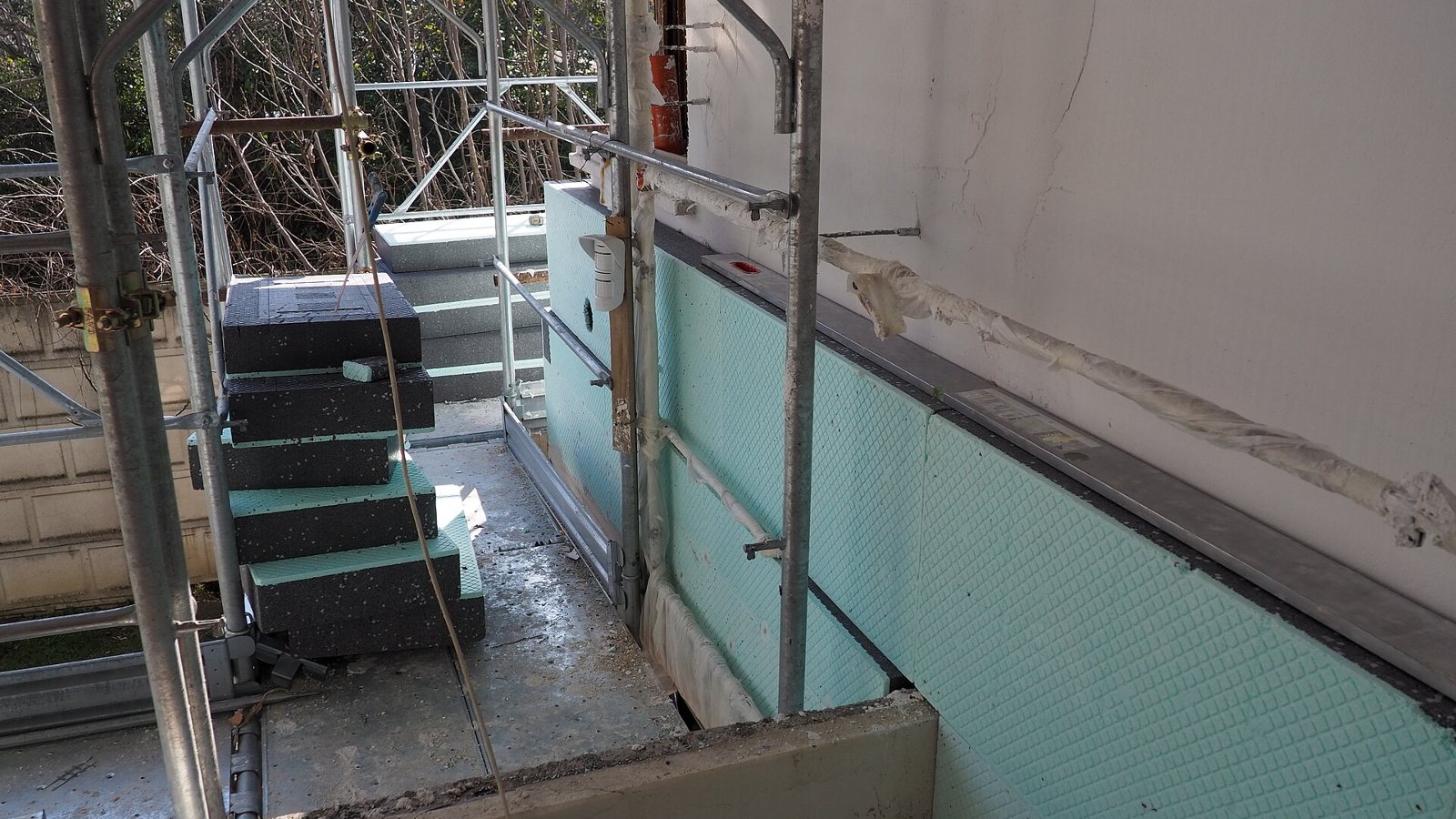
In May 2020, with the economy shut by Covid, Giuseppe Conte's government introduced a tax deduction worth 110% of the cost of making a home more energy-efficient or earthquake-proof. Homeowners didn't even need to wait for the deduction: they could pass it to the builder as a discount on the bill, or sell it to a bank. In effect, the state paid for the work and added 10%.1
Its supporters, led by the Five Star Movement, said it would pay for itself through the growth and taxes it generated. A study by Nomisma in 2022 claimed every euro the state spent had produced three euros of economic value.2 Giorgia Meloni calls it a "disastrous measure" of the left that is keeping Italy under EU deficit sanctions.3
We took the official cost figures from Istat, ENEA and the economy ministry, the Bank of Italy's estimates of the economic effect, and the European Court of Auditors' audit, and checked whether it could have paid for itself.
1. A €165bn bill, far above the forecast
The government's technical reports had expected the scheme to cost less than 2% of GDP in total.1 Instead, Istat found that the Superbonus added more than €150bn to the deficit in 2020–23 alone: 0.9% of GDP in 2021, 2.8% in 2022 and 3.9% in 2023. Over its whole life, the cost is about €165bn, and €188bn including the façade bonus that ran alongside it.4
ENEA's latest count, to the end of September 2026, shows 502,419 buildings renovated and €131.6bn of deductions accrued for the energy-efficiency part alone.5
Source: Eurostat, Istat, economy ministry; Polling Forecast calculation
The money was borrowed. Italy's deficit was 8.9% of GDP in 2021, 8.1% in 2022 and 7.1% in 2023. Without the Superbonus, it would have been about 8.0%, 5.3% and 3.2% (our calculation from Eurostat and Istat figures).64 In April 2026 the economy ministry said that without about €8.4bn of building credits that came to light unexpectedly, the 2025 deficit would have been 2.7% instead of 3.1%.7 Under 3%, Italy could have left the EU's excessive-deficit procedure.
2. How much came back in tax
Source: Polling Forecast calculation from Bank of Italy and Eurostat figures
For a subsidy to pay for itself, the extra economic activity it creates has to raise enough tax to cover its cost. Italy collects about 42% of GDP in taxes and social contributions.6 So even if every euro of subsidy created a full euro of extra output, the state would get back only about 42 cents.
The Bank of Italy estimates that about a quarter of the subsidised work, more than €45bn, would have been done anyway, and that each euro of the scheme raised output by about one euro.8 On those figures, about 32 cents came back for each euro spent (our calculation). Only with Nomisma's gross multiplier of three, which ignores the work that would have happened anyway, does the sum go above 100%.
The Bank of Italy told the Senate in April 2024 that "it can be ruled out that the measure's feedback effects on output were large enough for higher revenue to offset the deductions granted".1
3. What Italy got for the money
The building boom was real. Investment in homes rose from 3.9% of GDP in 2019 to 7.6% in 2023, before falling back to 4.4% in 2025 (our calculation from Eurostat).9 But much of the rise was in prices: in real terms, the excess over 2019 levels was €66bn smaller than in cash terms.
By the end of 2025, works had been completed on 481,785 buildings, covering about 1.29 million homes and offices, about 3.7% of Italy's 35.3 million dwellings.1011 That works out at roughly €98,000 of public money per home (our calculation).
The completed works save 16.2 TWh of energy a year.10 The European Court of Auditors compared the cost of that saving with other EU renovation schemes funded by the recovery fund. The Superbonus cost €9.72 for each kWh of annual saving. Lithuania's scheme cost €1.39, and a Brussels social-housing programme €2.23. "The Italian renovation measure is by far the most expensive and least cost-effective measure targeting the energy efficiency of residential buildings," the court wrote.12 If all the energy saved would otherwise have come from gas, the scheme cost roughly €1,300 to €1,900 per tonne of CO2 avoided (our calculation).
Verdict: the Superbonus did not pay for itself. Roughly a third of its cost came back in taxes, the rest was borrowed, and it is still adding to Italy's deficit five years on. It renovated fewer than one home in twenty-five, at a cost per unit of energy saved several times that of comparable schemes in Europe.
What the other side gets right
It helped the recovery. Housing investment almost doubled as a share of GDP between 2019 and 2023, and the Bank of Italy puts the multiplier near one: each euro did raise output by about a euro.8 It came when the economy needed support.
The energy savings are real. 16.2 TWh a year is a lot of energy, and many homes moved up several energy classes.10 They will keep saving energy for decades.
Fraud was not the main problem. About €15bn of irregular credits were found across all the building bonuses. In early 2022, only 3% of the fraud the tax agency had found was in the Superbonus; most was in the façade bonus and the ecobonus.13
Accounting rules made some years look worse. Under Eurostat's 2023 ruling, the full cost was booked in the years the work was done, which inflated the 2021–23 deficits and flattered the fall in 2024.4 The total cost is the same either way.
What the public thinks
We found no recent poll. In a Euromedia survey in February 2023, 30.7% said the Superbonus had mainly encouraged fraud and speculation, and 24.7% that it had wasted public money. 14.4% said it had mainly created work and jobs, and 3.7% that it had helped the environment.14
How we did it
The cost to the deficit by year is Istat's, as set out by the Chamber of Deputies' public-finance observatory in May 2024. Deficits are from Eurostat's October 2026 data; the deficits without the Superbonus subtract Istat's estimates, so are approximate. The share recouped in tax multiplies a tax ratio of 42% by the Bank of Italy's multiplier and its estimate of the share of work that would not otherwise have been done. Cost per home divides ENEA's accrued deductions for completed works by the number of homes and offices involved. The CO2 cost assumes the energy saved would otherwise have come from natural gas, over a 20- to 30-year life.
Sources
-
Banca d'Italia, Memoria to the Senate's 6th Committee on the Superbonus, 22 April 2024. https://www.bancaditalia.it/pubblicazioni/memorie/memorie-2024/Memoria-22-aprile-2024-superbonus.pdf↩↩↩
-
Il Fatto Quotidiano, report on Nomisma's analysis for Ance, 14 July 2022. https://www.ilfattoquotidiano.it/2022/07/14/superbonus-lanalisi-di-nomisma-sullimpatto-sociale-e-ambientale-ogni-euro-investito-dallo-stato-ne-ha-generati-3/6661898/↩
-
QuiFinanza, Meloni: Superbonus sciagurato, 23 April 2026. https://quifinanza.it/politica/meloni-superbonus-sciagurato-procedura-ue/975089/amp/↩
-
Camera dei deputati, Osservatorio sulla finanza pubblica, Superbonus, Dossier OFP04, May 2024. https://documenti.camera.it/leg19/dossier/pdf/Dossier_OFP_04_Superbonus.pdf↩↩↩
-
ENEA, Superbonus report to 30 September 2026. https://www.efficienzaenergetica.enea.it/images/Report_30_09_2026.pdf↩
-
Eurostat, government deficit (gov_10dd_edpt1) and tax ratios (gov_10a_taxag), October 2026 (Polling Forecast analysis). https://ec.europa.eu/eurostat/databrowser/view/gov_10dd_edpt1/default/table↩↩
-
Open, Documento Mef: il Superbonus e il deficit, 23 April 2026. https://www.open.online/2026/04/23/documento-mef-superbonus-deficit-pil/↩
-
Accetturo, Olivieri and Renzi, Banca d'Italia, Questioni di Economia e Finanza n. 860, June 2024. https://www.bancaditalia.it/pubblicazioni/qef/2024-0860/index.html↩↩
-
Eurostat, investment in dwellings (nama_10_an6), 2019 to 2025 (Polling Forecast analysis). https://ec.europa.eu/eurostat/databrowser/view/nama_10_an6/default/table↩
-
ENEA, Rapporto annuale sulle detrazioni fiscali 2026, 9 July 2026. https://www.efficienzaenergetica.enea.it/pubblicazioni/rapporto-annuale-detrazioni-fiscali/rapporto-annuale-sulle-detrazioni-fiscali-2026.html↩↩↩
-
Istat, Censimento permanente 2021: caratteristiche delle abitazioni, 1 August 2024. https://www.istat.it/comunicato-stampa/censimento-permanente-2021-caratteristiche-delle-abitazioni/↩
-
European Court of Auditors, Special Report 20/2026, July 2026. https://www.eca.europa.eu/ECAPublications/SR-2026-20/SR-2026-20_EN.pdf↩
-
Pagella Politica, Truffe Superbonus e bonus edilizi: 15 miliardi, 17 April 2024. https://pagellapolitica.it/articoli/truffe-superbonus-bonus-edilizi-15-miliardi↩
-
Euromedia Research for EuroWeek News, as reported by il Giornale, 4 March 2023. https://www.ilgiornale.it/news/interni/ha-favorito-frodi-e-sprechi-italiani-bocciano-superbonus-2122935.html↩
Polling Forecast reads every poll in ten countries, corrects for how pollsters have missed before, and turns them into seats. Our forecasts, the polls and our methods are free to explore.
Elsewhere on Polling Forecast
 Coalition candidate wins Lubuskie Senate by-election on 14% turnout
Zdzisława Różańska took 42.7% for the governing coalition, while our forecast still gives the right a Sejm majority in 86% of simulations.
 Merz enters budget week with the AfD almost six points ahead
The Bundestag votes on the 2027 budget on Friday, with the AfD on 26.7% in our average and the CDU/CSU on 21.0.
 Ruffin quits the race as Macron weighs a budget golden rule
One left-wing candidate fewer, and a possible constitutional vote at Versailles, while Le Pen leads our average on 32.8% and wins in 99% of our simulations.