
Has the rise in the minimum wage cost jobs?
Some, but far fewer than were created. Official estimates put the cost of three big rises at up to about 205,000 jobs, against almost 2.9 million added since 2018. Where the minimum wage bites hardest, jobs grew just as fast. The losses show in farming and domestic work. Our analysis of every region since 2018.
 Polling Forecast
7 min read
data as of 23 November
Written in house from our poll data and our forecast.

The verdict
| Question | Our answer | How sure |
|---|---|---|
| Has the rise in the minimum wage cost jobs? | Some, but far fewer than were created. AIReF, the fiscal watchdog, estimates that the 2019, 2023 and 2024 rises together cost up to about 205,000 jobs, lost or never created. Over the same years Spain added almost 2.9 million jobs. | Moderate |
| Did jobs grow more slowly where the minimum wage bites hardest? | No. In the eight regions where the 2024 minimum wage was at least 70% of the median wage, employment rose by 15.0% between 2018 and 2025. In the other nine it also rose by 15.0%. | Moderate |
| Who lost out? | The lowest-paid sectors. Social Security registrations of farm workers fell by 17% between 2018 and 2025, and of domestic workers by 16.5%. Other changes in those sectors also played a part. | Moderate |
| How big has the rise been? | Very large. The minimum wage rose from €735.90 a month in 2018 to €1,221 in 2026, 66% in cash and about 34% after inflation. It reaches €1,286 in 2027. | Strong |
The policy both sides use
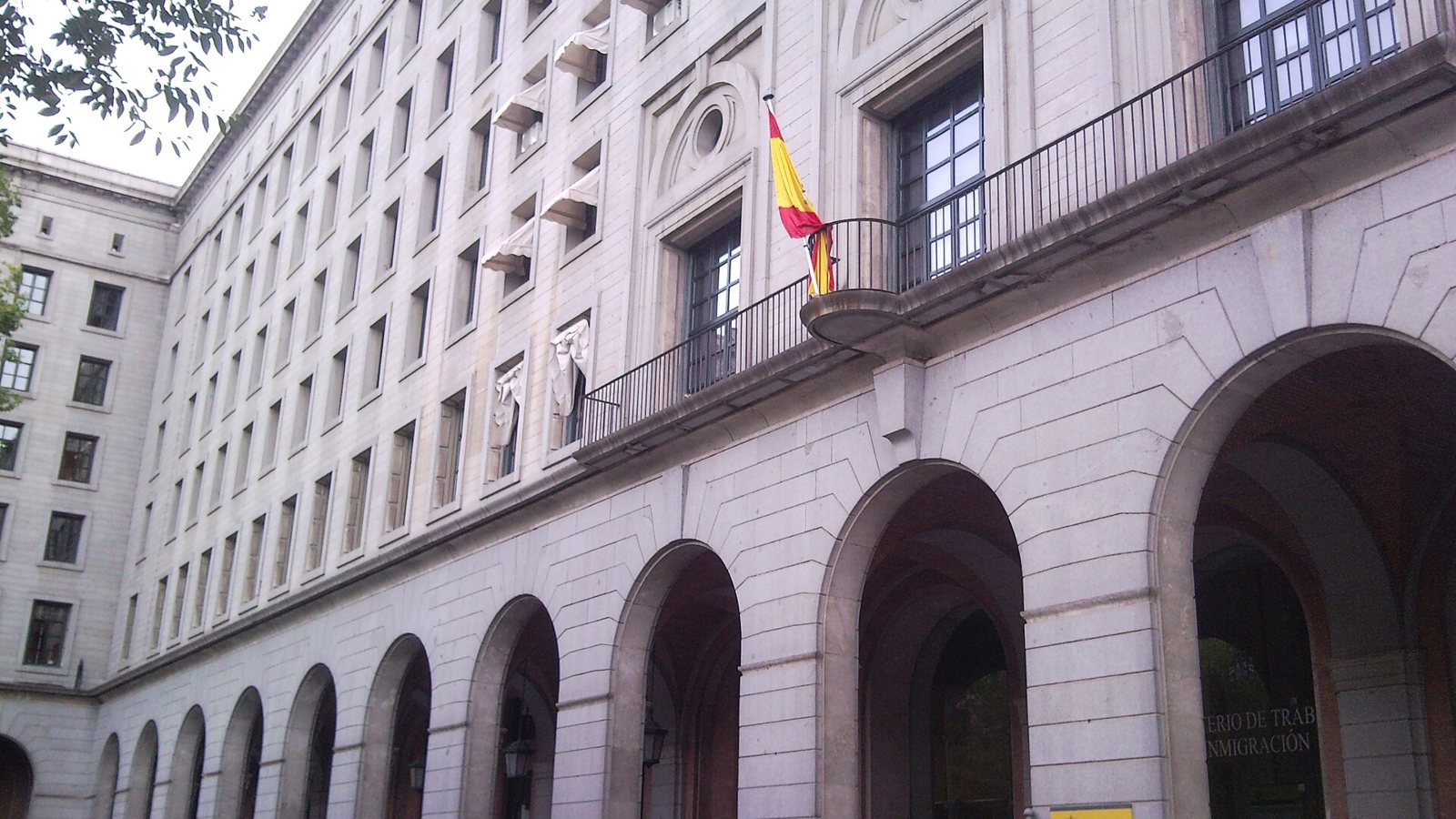
Few policies divide Spain's left and right as cleanly. The coalition governments of Pedro Sánchez have raised the minimum wage (SMI) every year since 2019, from €735.90 a month in 14 payments to €1,221 in 2026. A decree approved on 18 November 2026 raises it to €1,286 from January.1 The government's stated aim is to keep it at 60% of the average net wage.
The Banco de España has warned that rises this fast cost jobs, especially for young, low-skilled and rural workers. The government replies that employment has broken records every year.
Both are pointing at real figures. We set the official estimates side by side, and ran our own test: whether jobs grew more slowly in the regions where the minimum wage bites hardest.
1. A rise without precedent
The minimum wage rose by 22% in 2019 alone, and by 66% between 2018 and 2026. After inflation, the rise was about 34% (our calculation).12
That changed how much of the labour market it reaches. In 2018 the minimum wage was 41% of the median full-time wage; by 2025 it was 55%.3 The share of all workers whose annual earnings were at or below one minimum wage, including part-timers, rose from 14.1% in 2018 to 18.3% in 2024.4
2. The official estimates
Several studies have tried to measure the effect on jobs.
- Banco de España found that the 2019 rise cut employment growth among the workers directly affected by between 6 and 11 points, equal to 0.6–1.1% of all wage employment.5
- AIReF estimated in May 2026 that the 2019 rise cost 45,000–54,000 jobs, the 2023 rise 50,000–61,000 and the 2024 rise 78,000–90,000, an effect it called "negative but moderate".6
- Fedea, using Social Security data on firms, found that the most exposed workplaces saw employment grow 4.5 points more slowly after the 2019 rise, and estimated that about 40% of the potential wage gains were offset by lost jobs.7
- The government's expert commission concluded that the evidence did not show a significant reduction in employment growth from the 2019 rise.8
Adding AIReF's three estimates gives between 173,000 and 205,000 jobs (our calculation). Employment in the Labour Force Survey rose by about 2.9 million between 2018 and 2025.9 On AIReF's numbers, without the rises, employment would have grown by about 6–7% more than it did.
3. Our test: the regions
Source: INE, EPA (table 66043) and wage structure survey 2024 (table 28191), Polling Forecast analysis
The minimum wage is the same everywhere, but wages are not. In 2024 it was 74% of the median wage in Andalusia, 76% in Extremadura and 77% in the Canary Islands, but 57% in Madrid and 50% in the Basque Country (our calculation from the INE's wage survey).10 If the rises were costing many jobs, employment should have grown more slowly where the bite is biggest.
It didn't. In the eight regions where the minimum wage was at least 70% of the median, employment grew by 15.0% between 2018 and 2025. In the other nine, it also grew by 15.0% (our calculation, weighted by employment).11 Andalusia, Murcia and Valencia, all high-bite regions, grew faster than the Spanish average; Castilla y León and Galicia, also high-bite, grew much more slowly.
That doesn't prove the rises cost nothing. Regions differ in many ways, and the fastest-growing ones also received the most immigration. But it rules out a large effect visible at the regional level.
4. Where the losses show
The clearest losses are in the two sectors where pay is lowest. Social Security registrations in the special scheme for farm workers fell from about 811,000 in 2018 to 672,000 in 2025, by 17%. In the scheme for domestic workers they fell from about 411,000 to 343,000, by 16.5%.12
The Banco de España found that 59% of farm workers were directly affected by the 2019 rise, against 9% in market services.5 Other things may also have played a part, such as mechanisation in farming, and some domestic work may have moved off the books. But the fall is far larger than in the rest of the labour market.
Verdict: the minimum wage rises have cost jobs, mostly in farming and domestic work, and probably tens of thousands with each large rise. But the losses are small against the jobs created, and there is no sign that employment grew more slowly where the minimum wage bites hardest.
What the other side gets right
The effect may grow. At 55% of the median full-time wage, Spain's minimum wage is now high by international standards. Most of the studies measured the 2019 rise, from a much lower level. The expert commission itself said nobody knows the point at which the damage begins.8
Jobs not created are invisible. AIReF's figures include jobs that would have existed without the rises. A booming economy can hide them: employment grew strongly, but it might have grown more.
Workers gained. Fedea's estimate implies that most of the potential gain, about 60%, reached workers as higher pay. For the millions of workers on or near the minimum, the rises meant a large real-terms increase.
Black-market work is hard to see. Some of the jobs that left the farm and domestic schemes may have moved into the informal economy rather than disappeared, which would be a loss of a different kind.
What the public thinks
Source: 40dB
The rises are popular, though less than they were. In January 2025, 54.8% of people rated the minimum wage rise positively and 18.6% negatively, in a 40dB poll for El País and Cadena SER. By September 2025, 50.0% rated it positively and 43.7% negatively, though it was still the government's second-best-rated measure.13
How we did it
Minimum wage amounts are from the royal decrees in the BOE. The bite by region is the 2024 annual minimum wage of €15,876 divided by the median annual earnings in each region from the INE's 2024 wage structure survey, which includes part-time workers. Employment is the annual average of the INE's Labour Force Survey for 2018 and 2025. The comparison of high- and low-bite regions weights each region by its employment in 2018. The sum of AIReF's estimates and the real-terms rise are our own calculations.
Sources
-
BOE, royal decrees on the minimum wage, 2018 to 2027 (Real Decreto 1013/2026). https://www.boe.es/diario_boe/txt.php?id=BOE-A-2026-24189↩↩
-
INE, consumer price index. https://www.ine.es/dyngs/INEbase/es/operacion.htm?c=Estadistica_C&cid=1254736176802↩
-
OECD, minimum relative to median wages of full-time workers. https://data-explorer.oecd.org/↩
-
INE, Encuesta Anual de Estructura Salarial, table 28182. https://www.ine.es/jaxiT3/Tabla.htm?t=28182↩
-
Barceló, Izquierdo, Lacuesta, Puente, Regil and Soler, Banco de España Documento Ocasional 2113, 2021. https://ideas.repec.org/p/bde/opaper/2113.html↩↩
-
El Español, Las subidas del salario mínimo causaron la destrucción de empleos, según la AIReF, 30 May 2026. https://www.elespanol.com/invertia/economia/empleo/20260530/subidas-salario-minimo-causaron-destruccion-empleos-airef/1003744266056_0.html↩
-
Casanova, Catalán, Felgueroso and Jansen, Fedea EEE 2025-10, May 2025. https://documentos.fedea.net/documento/eee2025-10/texto↩
-
Comisión Asesora para el Análisis del SMI, third report. https://www.elindependiente.com/wp-content/uploads/2025/02/III_informe_expertos_PDF_OCR.pdf↩↩
-
INE, Encuesta de Población Activa, table 66043. https://www.ine.es/jaxiT3/Tabla.htm?t=66043↩
-
INE, Encuesta Anual de Estructura Salarial 2024, table 28191 (Polling Forecast analysis). https://www.ine.es/jaxiT3/Tabla.htm?t=28191↩
-
INE, Encuesta de Población Activa, employment by region, table 66043 (Polling Forecast analysis). https://www.ine.es/jaxiT3/Tabla.htm?t=66043↩
-
Forbes España, La Seguridad Social pierde 139.000 trabajadores agrarios y 67.000 del hogar desde 2018, 22 February 2026. https://forbes.es/economia/877990/la-seguridad-social-pierde-139-000-trabajadores-agrarios-y-67-000-del-hogar-desde-2018-tras-subidas-del-smi/↩
-
40dB for El País and Cadena SER, government barometers, January and September 2025. https://ep00.epimg.net/infografias/encuestas40db/2025/09-barometro/2025_09_informe_gobierno.pdf↩
Polling Forecast reads every poll in ten countries, corrects for how pollsters have missed before, and turns them into seats. Our forecasts, the polls and our methods are free to explore.
Elsewhere on Polling Forecast
 Coalition candidate wins Lubuskie Senate by-election on 14% turnout
Zdzisława Różańska took 42.7% for the governing coalition, while our forecast still gives the right a Sejm majority in 86% of simulations.
 Schlein's wealth tax meets a cool reception from her allies
The PD leader revived a 2% levy on the largest fortunes as the centre-left leads our Camera projection with 224 seats and a majority in 63% of simulations.
 Merz enters budget week with the AfD almost six points ahead
The Bundestag votes on the 2027 budget on Friday, with the AfD on 26.7% in our average and the CDU/CSU on 21.0.