
Do the polls overstate Marine Le Pen?
In the run-off, yes, every time: all 22 final polls at the three run-offs a Le Pen has reached had the candidate too high, by 3.7 points on average. In the first round of the presidential election, they don't. For 2027 the miss matters only if she faces Édouard Philippe. Our analysis of every final poll since 1995.
 Polling Forecast
10 min read
data as of 23 November
Written in house from our poll data and our forecast.

The verdict
| Question | Our answer | How sure |
|---|---|---|
| Do the polls overstate Marine Le Pen? | In the run-off, yes, every time. All 22 final polls at the three presidential run-offs the FN or RN has reached put its candidate too high, by 3.7 points on average. At the first round of legislative elections, they overstated the RN at all six since 2002. | Strong |
| And in the first round of the presidential election? | No. There the record is mixed. The polls understated the Le Pen candidate in 2002 and 2012, overstated it in 2007 and 2017, and were close in 2022. | Strong |
| Does it matter for 2027? | Only if she faces someone other than Jean-Luc Mélenchon. Against Mélenchon, her likeliest opponent, she polls 67.6%; a repeat of her worst miss would still leave her on 63%. Against Édouard Philippe, a 2017-sized miss would bring her down to 50.5%, too close to call. | Moderate |
| Why do the polls miss? | The evidence points to turnout and weighting, not shy voters. Pollsters say Le Pen's voters now decide early and are keen to vote. The misses are biggest when her opponents' voters turn out late, as in a run-off or a low-turnout regional election. | Moderate |
The story everyone remembers
On 21 April 2002, the polls had Lionel Jospin through to the second round and Jean-Marie Le Pen well behind him. Le Pen took 16.9% and Jospin 16.2%. All six polling institutes had underestimated the National Front by between three and six points.1 France has argued about hidden far-right voters ever since.
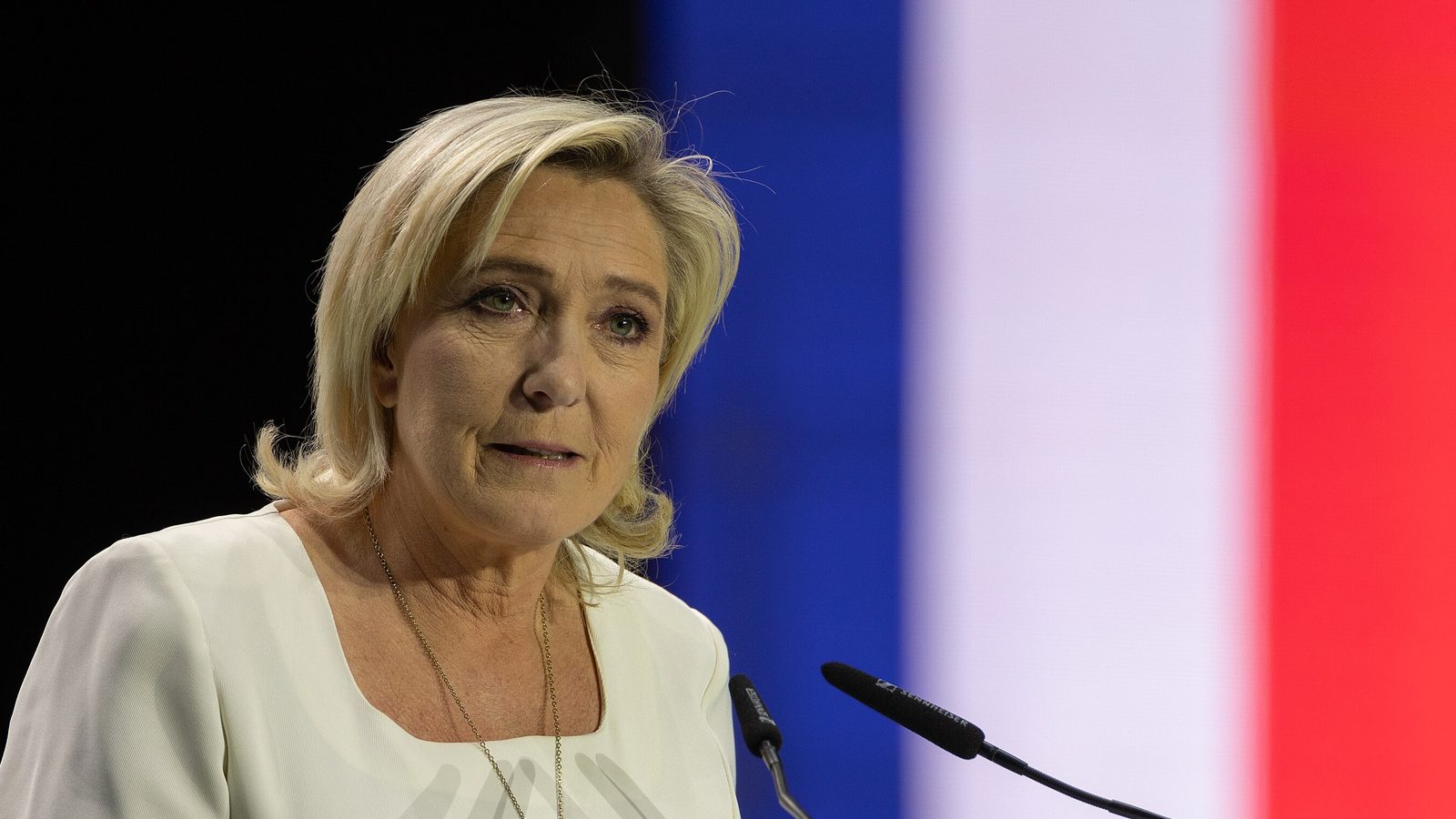
The 2027 presidential election is now 146 days away. Marine Le Pen, whose ban from office was cut on appeal in July 2026, has declared that she is a candidate.2 She leads every poll of the first round, on 32.8% in our average, and wins every run-off the pollsters have tested. Our forecast gives her a 99% chance of winning.3
So the question her opponents ask is the reverse of the one asked after 2002: do the polls now overstate her? We hold every final poll at every French presidential and legislative election since 2002, and at the 2021 regional and 2024 European elections. Here is what they show.
1. The run-offs: overstated every time
A Le Pen has reached the second round three times. In 2002, the three final polls gave Jean-Marie Le Pen 21.0% against Jacques Chirac on average. He won 17.8%. In 2017, the eight final polls gave Marine Le Pen 38.4% against Emmanuel Macron. She won 33.9%. In 2022, the 11 final polls gave her 44.8%. She won 41.5%.4
Not one of the 22 final polls at those run-offs had the Le Pen candidate too low. The smallest miss in 2022 was OpinionWay's, which had her on 43%, and the largest were AtlasIntel's and Odoxa's, at 47%. In 2017, every poll had her on 37% or more.4
The average miss across the three was 3.7 points, and the miss on the margin between the two candidates was twice that. In 2017, the polls put Macron's winning margin at about 23 points. It was 32.4
Every institute missed in the same direction, but some missed by much less. Across the 2017 and 2022 run-offs, Ipsos overstated Le Pen by 2.5 points on average and OpinionWay by 2.8. Ifop was 3.3 points out, Elabe 3.5 and Harris Interactive 3.8. BVA, Odoxa and Verian were out by between 4.5 and 5.3 points. Of the institutes that polled only one of the two, Cluster17 and YouGov were 2.5 points out in 2022, and AtlasIntel 5.5.4
That matters for reading the polls now. The institutes with the smallest past misses are not the ones showing Le Pen weakest today. Ipsos and OpinionWay, two of the closest in 2017 and 2022, have her on 33.5% and 34% in the first round, at or above our average.3
2. The legislative elections: overstated every time
Source: Polling Forecast record of final polls (first rounds of legislative elections; RN and allies)
The pattern holds at the first round of legislative elections. The polls overstated the FN or RN and its allies at all six since 2002, by 2.1 points on average. Of the 41 final polls we hold, 38 had it too high.4
The largest miss was in 2017, at 4.3 points, a month after Le Pen's run-off defeat. The most recent was in June 2024, after Macron dissolved the Assembly and the RN and its allies were favourites to come first. All seven final polls had them between 35% and 37%. They won 33.2%.4
The 2021 regional elections were worse. Across 27 final polls in ten regions, the RN's lists were overstated by 6.1 points on average, and by more than nine points in Auvergne-Rhône-Alpes and Occitanie. Only a third of voters turned out.5 At the 2024 European election, where the RN came first with 31.4%, the miss was smaller: the ten final polls averaged 32.2%, and nine of them had it too high.5
3. The first round is different
The one contest where the polls have not leaned against Le Pen is the first round of the presidential election.
They understated her father badly in 2002, and understated her in 2012, when she won 17.9% and every one of the eight final polls had her lower. In 2007 they overstated Jean-Marie Le Pen by 3.3 points. In 2017 eight of nine final polls had Marine Le Pen too high, though only by 0.9 points on average. In 2022 they were almost exactly right: 23.0% in the average of 11 final polls, against a result of 23.2%.4
Over five elections, that is 18 final polls too high and 22 too low. On the first round, there is no lean to correct.
Verdict: the polls overstate Le Pen when the vote is a choice for or against her: in run-offs, where every voter has to pick between her and one opponent, and in legislative elections, where the RN's opponents gang up in each seat. They don't overstate her in the first round of the presidential election.
4. Why the polls miss
The old explanation for the 2002 shock was that FN voters were reluctant to tell pollsters. Claire Durand of the Université de Montréal, who studied the 2002 polls, pointed to other causes as well: telephone samples that missed people without listed numbers, short fieldwork, and institutes whose figures had converged on one another.1 French pollsters have long adjusted their raw figures, weighting their samples by how people say they voted last time, partly to make up for FN voters missing from their samples.
That correction now seems to run the other way. Speaking to the National Assembly's inquiry into elections in April 2025, Jean-François Doridot of Ipsos said the FN had once been underestimated because its voters mobilised late in the campaign, and that "this is no longer the case: on the contrary, it is an electorate that is often very mobilised well before the campaign."6 At the same hearings, a deputy said a September 2021 poll had raised Le Pen's score by about three points through weighting, because her voters were judged under-represented in the raw sample, and Elabe's Vincent Thibault described her electorate as "very loyal".7
Frédéric Dabi of Ifop told the inquiry that the 2021 regional polls went wrong "because of a difference in abstention" between RN voters and the rest.8 The same applies to run-offs. Le Pen's voters have made up their minds and turn out. Many of her opponents' voters decide late whether to vote at all, and when they do, they vote against her. A poll taken in the last week captures her vote well and theirs less well.
Late events also play a part. In 2017, Ifop's poll after the run-off debate, which Dabi called a knockout win for Macron, had Le Pen down two points to 37%.9 She finished on 33.9%.
5. What it means for 2027
Le Pen's first-round lead is so large that no past miss would change who reaches the second round. Our forecast gives her more than a 99% chance of getting there, and Jean-Luc Mélenchon a 95% chance.3
Against Mélenchon, she polls 67.6% on average in the six polls since October. If the polls missed by as much as they did in 2017, she would still win with 63%. The run-off that her opponents most want, against Édouard Philippe, is much closer. She leads him by 55% to 45% on average, and a miss the size of 2017's would leave her on 50.5%. In the two polls with the narrowest margins, both taken in October, YouGov's at 52% and Odoxa's at 53%, a 2017-sized miss would put Philippe ahead.3
Our forecast already takes this into account. It removes 1.8 points from the RN candidate's share in each run-off poll, half the average past miss, which was closer to the result at four of the five past run-offs we tested.3
There is a larger caveat. These are polls taken five months before the first round, and the misses above are for final polls. Le Grand Continent compared polls taken about 200 days before each presidential election with the results, and found they had overstated the FN candidate's first-round score in 2007, 2012 and 2017, and understated it in 2002 and 2022.10 A great deal can change before April.
Verdict: the polls have overstated Le Pen at every run-off, by enough to matter in a close race. On today's figures, that is a close race only if she faces Philippe, and he has a 3% chance of reaching the second round.
What the other side gets right
The past miss may not repeat. Pollsters adjusted their methods after 2002 to find FN voters, and they adjust them again after each election. Ifop says the weight it gives to past vote is now "less important, even marginal".8 If the industry has corrected the run-off lean since 2022, our own correction could take too much off.
Le Pen is a different candidate now. In 2017 and 2022 she faced Macron, who drew votes from the left and the centre-right in a run-off. The "republican front" that brought out voters against her has weakened at each election: her run-off share rose from 33.9% to 41.5% between 2017 and 2022. If that continues, the late rally against her that the polls kept missing may be smaller in 2027.
The legislative polls of 2024 were close on the big picture. They overstated the RN by about three points, but correctly had it first in the first round. What they missed was the second round, where tactical withdrawals by left and centre candidates cut the RN's seats far below what had been projected. That is a failure of seat projection more than of polling.
First-round polls have understated her. The 2002 and 2012 misses ran in her favour. If the first round again surprises on the upside, she could go into the run-off with more momentum than the polls show.
What the public thinks
Trust in polls in France is low. In a Happydemics barometer published in November 2021, 45% of French people said they trusted the results of polling institutes, down from 68% a year earlier, and 71% had a negative view of them.11
The polls underestimated the National Front once, spectacularly, in 2002. Since then, at the votes where the choice was for or against the Le Pens, they have done the opposite.
How we did it
We used our record of the final polls at every French presidential election since 1995 and every legislative election since 2002, from the polling institutes' own publications and the notices filed with the Commission des sondages, and the official results from the Ministry of the Interior. A final poll is each institute's last poll before the vote. Errors are the poll's share for the FN or RN candidate, or the RN and its allies at legislative elections, minus the result, among votes cast for a candidate. Regional and European figures come from our record of final polls at those elections, using the lists the polls attributed to the RN. Figures for 2027 run-offs are the simple average of each pollster's latest poll of that pairing since 1 October 2026.
Sources
-
Université Laval, Sondages: les raisons d'un échec, reporting Claire Durand on the 2002 polls, 13 February 2003. https://news.ulaval.ca/pages/archives/2003/02.13/sondage.html↩↩
-
Public Sénat, Présidentielle: Marine Le Pen est candidate et se pourvoit en cassation, 7 July 2026. https://www.publicsenat.fr/actualites/politique/presidentielle-marine-le-pen-est-candidate-et-se-pourvoit-en-cassation↩
-
Polling Forecast, France 2027 forecast and presidential polls, 23 November 2026. https://www.pollingforecast.com/fr/polls↩↩↩↩↩
-
Polling Forecast, How accurate are France's polls?, record of final polls at presidential and legislative elections. https://www.pollingforecast.com/fr/accuracy↩↩↩↩↩↩↩
-
Polling Forecast, Other elections: polls at the 2024 European and 2021 regional elections. https://www.pollingforecast.com/fr/other-elections↩↩
-
Assemblée nationale, commission d'enquête on the organisation of elections, hearing of Ipsos, 29 April 2025. https://www.assemblee-nationale.fr/dyn/17/comptes-rendus/ceelec/l17ceelec2425034_compte-rendu.pdf↩
-
Assemblée nationale, commission d'enquête on the organisation of elections, hearing of Elabe. https://www.assemblee-nationale.fr/dyn/17/comptes-rendus/ceelec/l17ceelec2425033_compte-rendu.pdf↩
-
Assemblée nationale, commission d'enquête on the organisation of elections, hearing of Ifop. https://www.assemblee-nationale.fr/dyn/17/comptes-rendus/ceelec/l17ceelec2425037_compte-rendu.pdf↩↩
-
Paris Match, Sondage présidentielle: après le débat, Macron fait le break, 5 May 2017. https://www.parismatch.be/actualites/politique/2017/05/05/sondage-presidentielle-francaise-apres-le-debat-macron-fait-le-break-Q4RJFK4DOFGXRJNJLM22DF3O7M/↩
-
Le Grand Continent, De Le Pen à Macron: que disaient les sondages 200 jours avant les précédentes élections présidentielles?, 30 September 2026. https://legrandcontinent.eu/fr/2026/09/30/de-le-pen-a-macron-que-disaient-les-sondages-200-jours-avant-les-precedentes-elections-presidentielles/↩
-
Happydemics barometer, November 2021, as reported by J'ai un pote dans la com. https://jai-un-pote-dans-la.com/70-des-francais-ont-un-sentiment-negatif-sur-les-instituts-de-sondages/↩
Polling Forecast reads every poll in ten countries, corrects for how pollsters have missed before, and turns them into seats. Our forecasts, the polls and our methods are free to explore.
Elsewhere on Polling Forecast
 Coalition candidate wins Lubuskie Senate by-election on 14% turnout
Zdzisława Różańska took 42.7% for the governing coalition, while our forecast still gives the right a Sejm majority in 86% of simulations.
 Schlein's wealth tax meets a cool reception from her allies
The PD leader revived a 2% levy on the largest fortunes as the centre-left leads our Camera projection with 224 seats and a majority in 63% of simulations.
 Merz enters budget week with the AfD almost six points ahead
The Bundestag votes on the 2027 budget on Friday, with the AfD on 26.7% in our average and the CDU/CSU on 21.0.