
Le Pen leads for 2027, and her run-off rival matters most
Our forecast gives Marine Le Pen an 80% chance of the presidency, and almost all of the doubt depends on who reaches the run-off against her.
 Polling Forecast
4 min read
Polling Forecast
4 min read
Written in house from our poll data and our forecast.
.jpg)
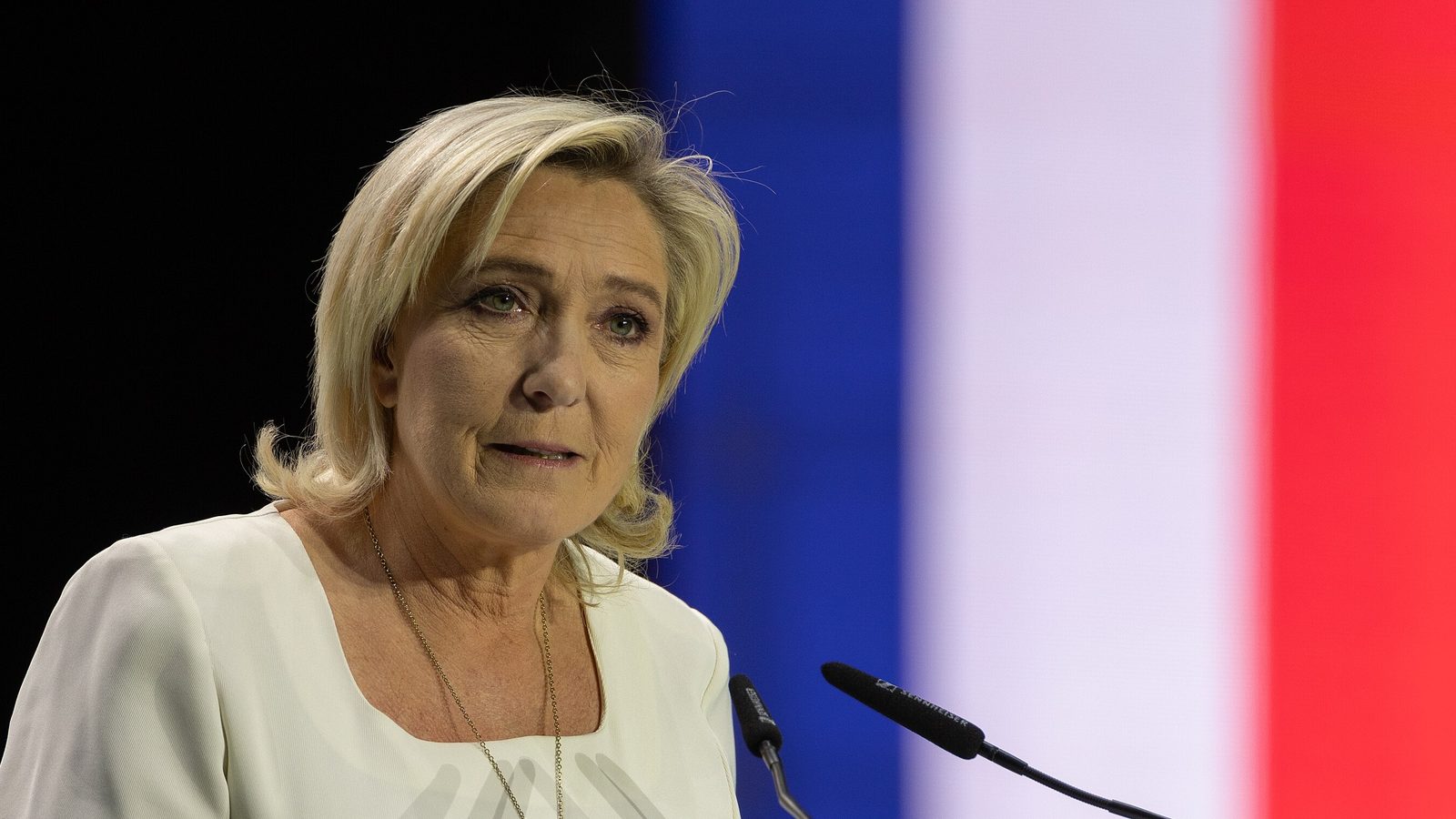
Marine Le Pen is elected president in 80% of our simulations of the 2027 election, six months before the first round on 18 April. Her first-round poll average is 34.1%, 16.4 points ahead of Édouard Philippe on 17.6%. Jean-Luc Mélenchon is on 16.8%, Raphaël Glucksmann on 11.0% and Bruno Retailleau on 7.4%. Le Pen reaches the run-off on 2 May in over 99% of our 20,000 simulations.
She is in the race because of a court ruling in July. On 7 July the Paris appeal court upheld her conviction for misusing European Parliament funds but cut her ban on holding office to 45 months, 30 of them suspended, Al Jazeera reported; she had already served the other 15. She told TF1 that evening that she would stand, and that she would appeal to the Cour de cassation. Our model also follows a line-up with Jordan Bardella as the RN's candidate. Fewer pollsters have tested it, the latest in June, and on those polls Bardella wins 31% of simulations, because he trails Philippe in run-off polls by 48.3% to 51.8% on average.
Two run-offs, two different elections
The 80% is the sum of two quite different contests. The likeliest run-off is Le Pen against Philippe, which happens in 60% of our simulations. The polls as published have Le Pen winning it by 53.7% to 46.3%. We take 1.8 points off the RN candidate's run-off share, for reasons set out below, which makes it 51.8% to 48.2%, and Le Pen wins 66% of those simulations.
The other is Le Pen against Mélenchon, in 40% of simulations. Here the polls have her on 65.9%, and after our correction she still wins by 64.1% to 35.9%, which in our model means practically every time. Philippe's 20% chance of the presidency rests entirely on getting to the run-off. Glucksmann trails Le Pen by 56.7% to 43.3% in run-off polls, closer than Mélenchon, but our simulations give him under a 1% chance of reaching round two.
So the race for second place matters most, and it has tightened. Mélenchon is up 3.8 points since July, from 13.0% to 16.8%, more than any other candidate. Harris Interactive's poll of 8 October, the newest in our data, had Le Pen on 36%, Mélenchon on 18% and Philippe on 17%. Ifop's, to 29 September, had Philippe on 21% and Mélenchon on 16%. Le Pen's own average has hardly moved: it was 33% a year ago and 34.0% six months ago.
A crowded centre
The field is not settled. Gabriel Attal declared his candidacy in May, according to Wikipedia, and pollsters test the race with and without him. Where both he and Philippe stand, Philippe's share drops. Harris put him on 13% with Attal in the field and 17% without, with Mélenchon second in both. In Ifop's poll Philippe had 16% alongside Attal and 21% without him. Our main line-up, the one most pollsters lead with, has Philippe alone for the Macron camp, so a split centre is a risk to his chances that the 20% does not include.
On the centre-left the question is settled. Glucksmann won the primary of the Socialists and Place publique on 11 October with 66.17% of the vote, LCP reported, and he is already the candidate in both of our line-ups.
How French polls have missed
Round-one polls have missed the RN's candidate in both directions. Final polls had the candidate 3.9 points too low in 2002 and 3.3 too high in 2007, then 2.0 points too low in 2012, 0.9 too high in 2017 and 0.2 too low in 2022. In 2022 they understated Mélenchon by 4.8 points. Because these misses change direction, we do not correct round one: a correction made the forecast worse at four of five elections. Replaying past misses on today's polls shows the range. A miss like 2002's would put Le Pen on 38.4%. A miss like 2022's would lift Mélenchon to 21.6%, ahead of Philippe, and make the run-off Le Pen against Mélenchon, which she wins 64 to 36 on our numbers.
Run-off polls are different. At each of the three run-offs the RN's candidate has reached, in 2002, 2017 and 2022, the final polls overstated the RN, by 3.2, 4.5 and 3.3 points, 3.7 on average. We take off half of that, 1.8 points. Tested on each run-off since 2000 without knowing its result, the correction was closer at four of five. That is why our Le Pen against Philippe figure is closer than the polls. Overall, France's final polls are among the more accurate we track, missing by 1.3 points per party, third of ten countries.
Six months is a long time
Polls this far out have moved by about 5.2 points per candidate by polling day, so the chances widen. Allowing for that drift, Le Pen's chance on polling day is 77%, Philippe's 19%, Glucksmann's 2% and Mélenchon's 1%. Philippe's chance of reaching round two rises to 47% on that basis, and Glucksmann's to 9%.
The campaign also runs through a budget fight. On 13 October the Assembly began debating the 2027 budget, with which Sébastien Lecornu's government aims to cut the deficit to 5% of GDP. Le Pen said she would rather see an "imperfect" budget adopted, believing she could reshape it if elected, AFP reported. The RN voted against a Socialist motion to reject the bill, which failed by 236 votes to 149, LCP reported.
On our figures Le Pen's chance depends less on her own vote, steady at around a third for a year, than on who finishes second. If it is Philippe, our model makes the run-off close. If it is Mélenchon, it does not.
Polling Forecast reads every poll in ten countries, corrects for how pollsters have missed before, and turns them into seats. Our forecasts, the polls and our methods are free to explore.
Elsewhere on Polling Forecast
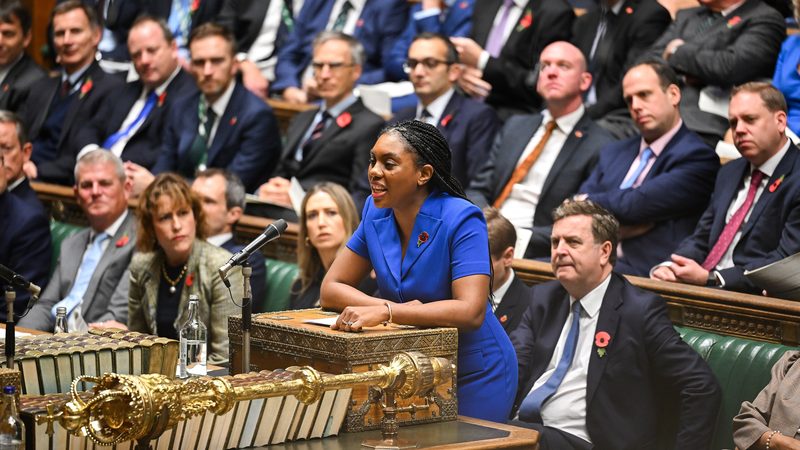 353 seats? The mega-poll's Labour majority comes from a split right, not tactical voting
Run the mega-poll's own vote shares through our model and Labour still gets 358 seats. The difference from our 316 is a weaker Conservative Party and a stronger Restore Britain, not the tactical voting the coverage focused on.
353 seats? The mega-poll's Labour majority comes from a split right, not tactical voting
Run the mega-poll's own vote shares through our model and Labour still gets 358 seats. The difference from our 316 is a weaker Conservative Party and a stronger Restore Britain, not the tactical voting the coverage focused on.
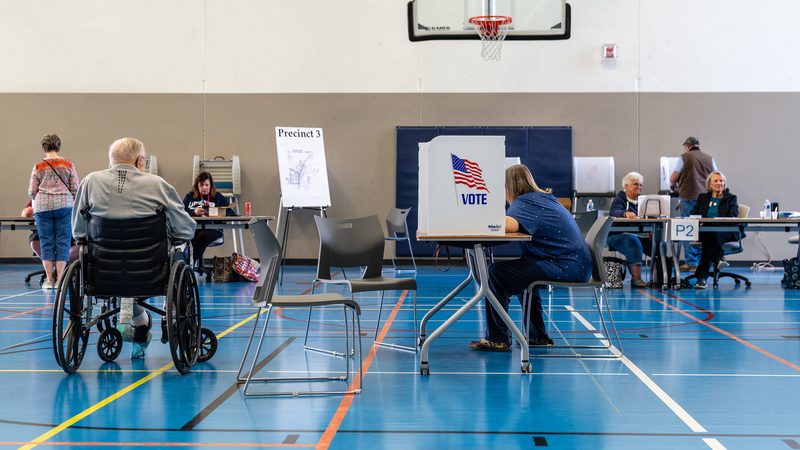 North Carolina mail ballots trail 2022 pace equally for both parties
Measured against their own registered voters, North Carolina Democrats and Republicans are returning mail ballots at about 70 percent of their 2022 pace, with Maine ahead.
North Carolina mail ballots trail 2022 pace equally for both parties
Measured against their own registered voters, North Carolina Democrats and Republicans are returning mail ballots at about 70 percent of their 2022 pace, with Maine ahead.
 Polls understated PiS in 31 of 32 final surveys since 2024
At four national votes since Tusk took office, final polls put PiS or its candidate too low. Our forecast makes no allowance for it.
Polls understated PiS in 31 of 32 final surveys since 2024
At four national votes since Tusk took office, final polls put PiS or its candidate too low. Our forecast makes no allowance for it.