
Italy's 42% bonus hinges on where Vannacci's party stands
Our projection gives the centre-left 223 seats under the new law, but with Futuro Nazionale inside the centre-right the bonus switches sides.
 Polling Forecast
4 min read
Polling Forecast
4 min read
Written in house from our poll data and our forecast.


Under the electoral law Italy's parliament passed on 8 October, our projection gives the centre-left 223 of the 400 seats in the Chamber of Deputies and a 66% chance of winning the new majority bonus. The centre-right, led by Giorgia Meloni's Brothers of Italy (FdI), would have 140 seats. That result rests on one assumption more than any other: that Roberto Vannacci's Futuro Nazionale runs outside the centre-right. Put it inside, and the same polls give the centre-right 224 seats.
The polls themselves have barely moved for months. Our average has FdI on 26.9%, the Democratic Party (PD) on 20.1%, the Five Star Movement (M5S) on 12.9% and Futuro Nazionale on 7.7%. FdI is the largest party by almost seven points. Whether that makes Meloni the favourite depends on who stands with whom.
What the new law does
The Chamber approved the law by 227 votes to 164. It scraps the single-member seats that elected about a third of parliament under the old system and shares all seats in proportion to the vote. A coalition needs 10% to win seats and a party 3%. The coalition that comes first with at least 42% of the vote gets 70 extra deputies and 35 extra senators, up to a cap of 220 deputies and 113 senators, according to a Reuters factbox. If two coalitions clear 42%, the larger one takes the bonus. Each coalition must also name its candidate for prime minister, and parties outside parliament must now collect 6,000 signatures per constituency to stand, up from 1,500.
Meloni says the rules will produce stable government. The opposition says they are designed to keep her in office. Elly Schlein, the PD leader, called the reform a "scam", and Giuseppe Conte of the M5S said the government had passed it out of "fear of losing", the Catalan daily Ara reported. About 160 constitutional lawyers have objected to the size of the bonus and to the Senate's bonus being decided nationally. A challenge can only reach the Constitutional Court through a case in the ordinary courts, so whether it is heard before the election is uncertain.
Why our projection has the centre-left ahead
Our projection uses the line-up the centre-left has fielded in regional elections since 2024: the PD, the M5S, the Greens and Left Alliance (AVS), +Europa and Italia Viva together. On the right it groups FdI, the League, Forza Italia and Noi Moderati. Futuro Nazionale, the party Vannacci formed after leaving the League, and Carlo Calenda's Azione run alone.
On those terms the centre-left takes 44.1% and the centre-right 40.6%. The gap is wider than a simple sum of the poll averages, because our forecast corrects for how Italian polls have missed. At every general election since 2001, final polls understated the M5S, by 5.7 points on average. We take off half of each party's average miss, a correction that would have made our forecasts closer at four of the last six elections.
The bonus is not as close as the vote shares suggest. In 81% of our 2,000 simulated elections the centre-left reaches 42%, and the centre-right does so in 57%. Because the first-placed coalition takes the bonus, a lead of a few points is enough. In practically none does nobody reach 42%. Italy's polls carry more risk than most: on our accuracy rankings its final polls miss by 2.6 points, the largest error of the ten countries we cover.
Under the old law, the same vote would have given the centre-left 208 seats and the centre-right 161. The new rules add 15 seats to the winner in our central projection.
The Vannacci question
Futuro Nazionale changes everything. With it inside the centre-right, our seat model gives the right 224 deputies and the centre-left 165, and the right a 70% chance of a majority in both chambers. If the parties instead stood as they did in 2022, with the M5S on its own, the centre-right would take 220 seats and the centre-left 96.
Whether Meloni's partners would accept Vannacci is open. A YouTrend poll reported by QuiFinanza in August found 53% of FdI voters in favour of bringing Futuro Nazionale into the coalition, against 26% of League and Forza Italia voters. Ara reported that Forza Italia and the League are unwilling to take him in. Vincenzo Emanuele of the CISE research centre told Al Jazeera that a PD and M5S alliance could reach 44%, but that this could change if Meloni allied with Futuro Nazionale.
The Senate and the date
A government needs the confidence of both chambers. Our Senate projection, on the same shares, gives the centre-left 111 of the 200 elected senators and the centre-right 71, with 101 needed for a majority. Five senators for life also vote. In our simulations the two chambers go the same way: the centre-left wins both in 66% of runs.
The election must be held by 22 December 2027, five years and 70 days after the current parliament first met. It may come sooner. Conte said on La7 that a spring vote was "fairly likely", Open reported on 6 October, and wants the centre-left to hold primaries quickly. Schlein would rather wait for the Constitutional Court, whose ruling on the law could come between January and March 2027, according to the same report. The two leaders have not agreed who would lead the coalition, which the new law requires them to name.
What to watch
The polls are steady. SWG's latest poll, completed on 12 October, had FdI on 27.7%, the PD on 20.4%, the M5S on 12.7% and Futuro Nazionale on 7.6%, all within a point of its previous figures. House effects are small: EMG Different usually puts FdI about a point below other pollsters, and Tecnè puts Forza Italia two points above.
The arithmetic is simpler than it looks. On today's polls, the coalition that includes the M5S and holds together wins the bonus, unless Futuro Nazionale's 7.6% joins the right. The law has made coalition-building, not the vote, the main uncertainty in Italy's next election.
Polling Forecast reads every poll in ten countries, corrects for how pollsters have missed before, and turns them into seats. Our forecasts, the polls and our methods are free to explore.
Elsewhere on Polling Forecast
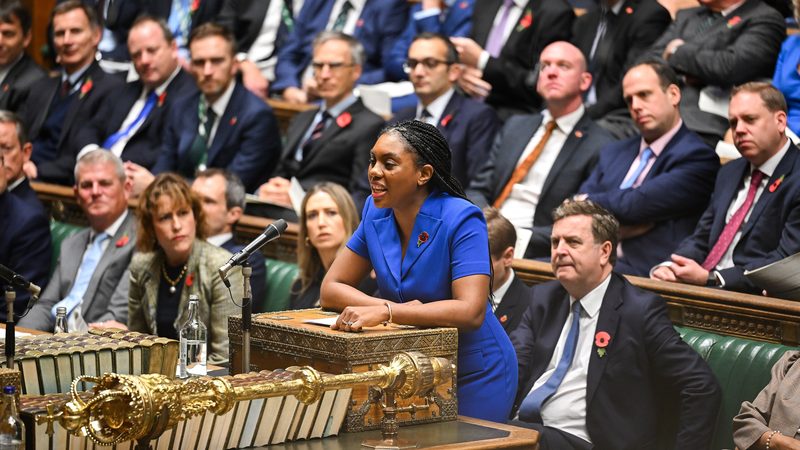 353 seats? The mega-poll's Labour majority comes from a split right, not tactical voting
Run the mega-poll's own vote shares through our model and Labour still gets 358 seats. The difference from our 316 is a weaker Conservative Party and a stronger Restore Britain, not the tactical voting the coverage focused on.
353 seats? The mega-poll's Labour majority comes from a split right, not tactical voting
Run the mega-poll's own vote shares through our model and Labour still gets 358 seats. The difference from our 316 is a weaker Conservative Party and a stronger Restore Britain, not the tactical voting the coverage focused on.
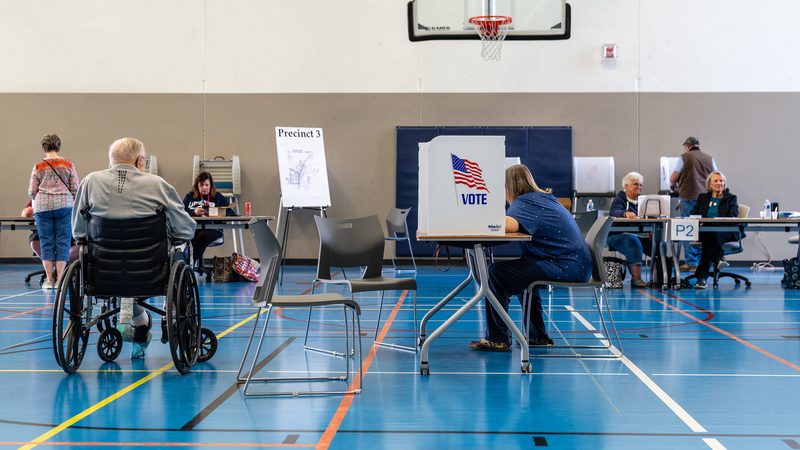 North Carolina mail ballots trail 2022 pace equally for both parties
Measured against their own registered voters, North Carolina Democrats and Republicans are returning mail ballots at about 70 percent of their 2022 pace, with Maine ahead.
North Carolina mail ballots trail 2022 pace equally for both parties
Measured against their own registered voters, North Carolina Democrats and Republicans are returning mail ballots at about 70 percent of their 2022 pace, with Maine ahead.
 Polls understated PiS in 31 of 32 final surveys since 2024
At four national votes since Tusk took office, final polls put PiS or its candidate too low. Our forecast makes no allowance for it.
Polls understated PiS in 31 of 32 final surveys since 2024
At four national votes since Tusk took office, final polls put PiS or its candidate too low. Our forecast makes no allowance for it.